Before reaching Vietnam
Continuing from the last post, Badri and I took a flight from the Brunei International Airport to Kuala Lumpur on the 12th of December 2024. We reached Kuala Lumpur in the evening.
After arriving at the airport, we went through immigration. In a previous post, I mentioned that we had put our stuff in lockers at the TBS bus terminal in Kuala Lumpur. Therefore, we had to go there.
The locker was automated and required us to enter the PIN we had set. Upon entering the PIN, the locker wasn’t getting unlocked. After trying this for 10-15 minutes without any luck, we tried getting some help as there the lockers weren’t under supervision.
So, I roamed around and found a staff member, reporting that our lockers weren’t getting unlocked. They called the person who was in-charge of the lockers. He came to us in a few minutes and used their admin access to open the locker. We were supposed to pay for using the lockers by putting the banknotes inside through a slot. However, as the machine wasn’t working, we gave the amount for the use of our locker service to that person instead.
We soon went back to the KL airport to catch our morning flight to Ho Chi Minh City in Vietnam. At the flight counter, we were afraid we would have to pay extra as our luggage surpassed the allowed weight limit. This one was also a budget airline—AirAsia—and our tickets didn’t include a check-in bag.
Generally, passengers from countries requiring a visa to visit Vietnam (such as India) require going to the airline and showing their visa to get the boarding pass. However, when we went to the AirAsia counter at the Kuala Lumpur airport, they didn’t weigh our bags and asked us to get our boarding passes from an automated kiosk. So, we got our boarding passes printed and proceeded to the airport security.
While clearing the airport security, a lotion I bought from Singapore was confiscated because it was 200 mL, exceeding the limit of 100 mL per bottle. Had that 200 mL liquid been in two different bottles of 100 mL each, I would have been allowed to take it in my carry-on bag, but a single 200 mL bottle wasn’t! I was allowed to keep it in the check-in bag, but I didn’t have it included in my ticket. Huh, airports and their weird rules :( The lotion was an expensive one, so having it thrown away did ruin my mood.
Overview
We started our Vietnam trip from Ho Chi Minh City in the south on the 13th of December 2024 and finished it in Hanoi in the north on the 20th of December. We traveled from Ho Chi Minh City to Hanoi mostly by train, except for a hundred or so kilometers by bus, in chunks. On the way, we visited Nha Trang, Hoi An, and Hue. The distance between Ho Chi Minh City and Hanoi is 1700 km.
For your reference, here are those places labeled on Vietnam’s map.
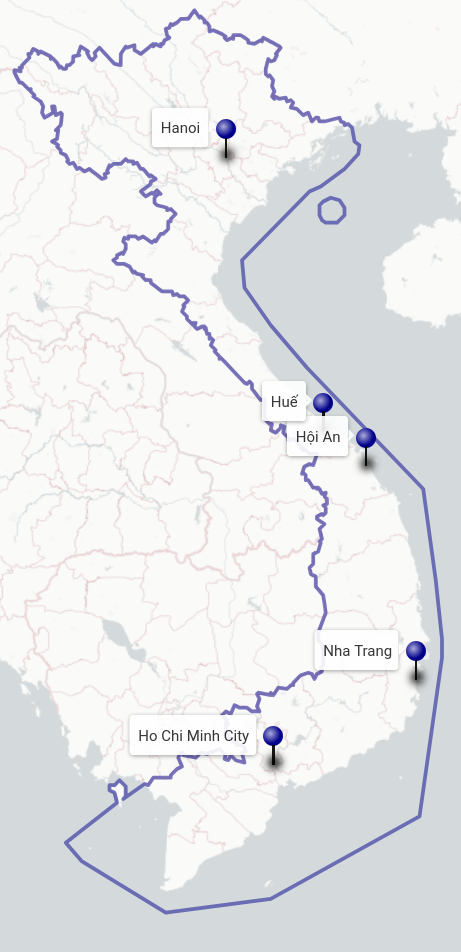
A map of Vietnam with points of places we went to labeled. ©CARTO ©MAPTILER ©OPENSTREETMAP
Ho Chi Minh City
We landed in Ho Chi Minh City early morning on the 13th of December 2024. I was tired and sleepy as I hadn’t gotten a good night’s sleep. After going through immigration, we went to a currency exchange counter to get Vietnamese Dong. Unlike other countries on this trip, money exchange counters in Vietnam didn’t accept Indian rupees. Therefore, we exchanged euros to get Vietnamese dong at the airport.
After getting out of the airport, we took a bus to the city center. It was 15,000 dongs—approximately 50 Indian rupees. Our plan was to meet Badri’s friend and stay the night at his apartment.
So we went to a café nearby and bought a coffee for each of us for 75,000 dongs. We went upstairs and sat for a while. The Wi-Fi password was mentioned on our bill. During the trip, I found out about the café culture of Vietnam. They have their own coffee brands (such as Highlands Coffee), and you can sit down at any of the cafés for work or wait for the rain to stop. It rained a lot while we were there, so we did use these cafés for that purpose.
Badri’s friend met us there, and we roamed around the area a bit, which included roaming inside a beautiful park. Then Badri’s friend took us to a restaurant. Because I do not eat meat, he took us to a vegan restaurant. Having been to four Southeast Asian countries at this point (excluding Vietnam), I was under the impression that there wouldn’t be a lot of things for my diet in Vietnam.
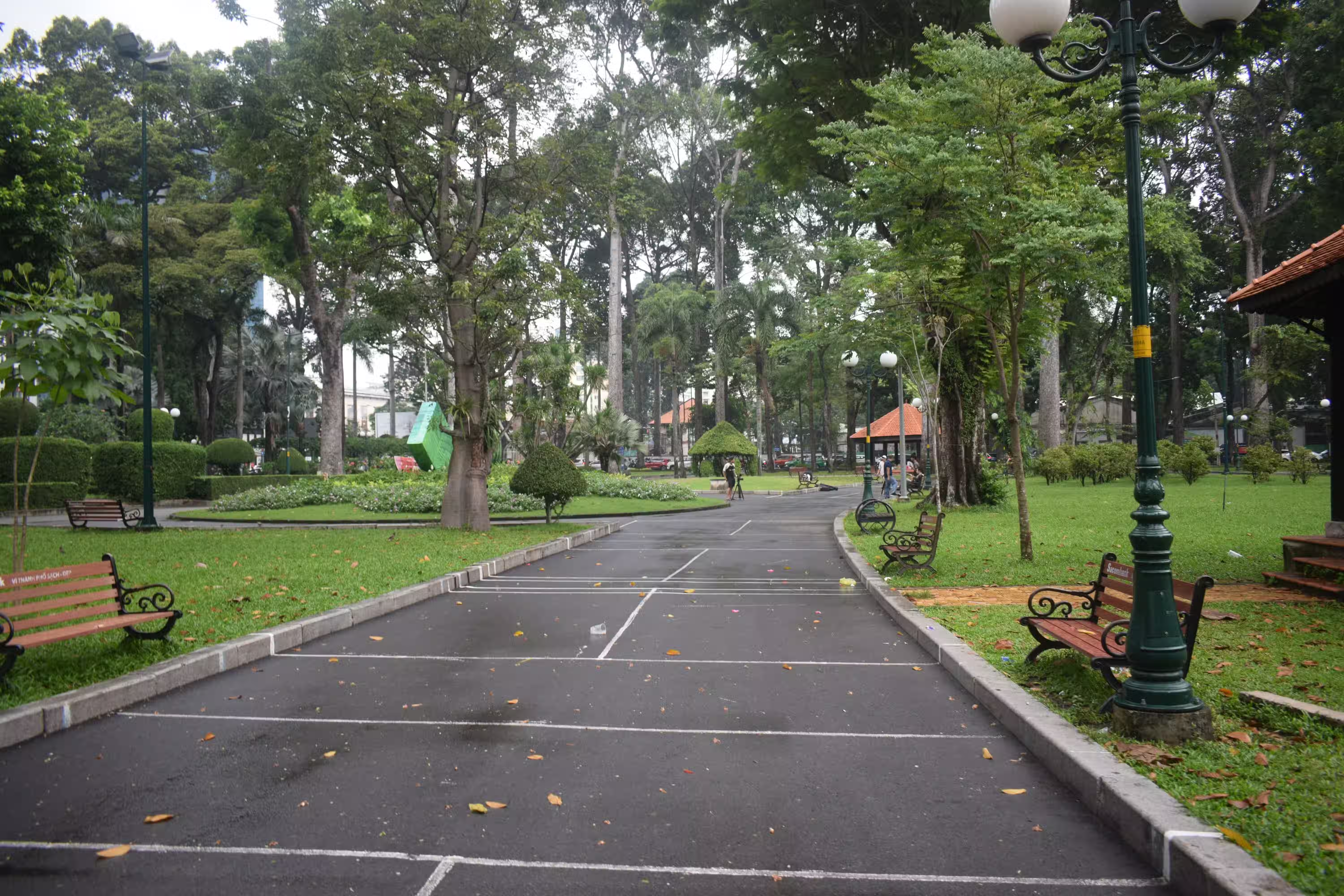
A picture of the park we roamed around in Ho Chi Minh City. Photo by Ravi Dwivedi, released under CC-BY-SA 4.0.
However, I was pleasantly surprised at the restaurant. I found all the dishes to be tasty, especially their signature noodles called Pho. I liked another dish so much that I tracked down the restaurant again with Badri using the geotagged image of the bill I had taken earler to have it again. As a tip for vegans coming to Vietnam, the places having the letters “Chay” (without any accented letters) in their name are vegan only.
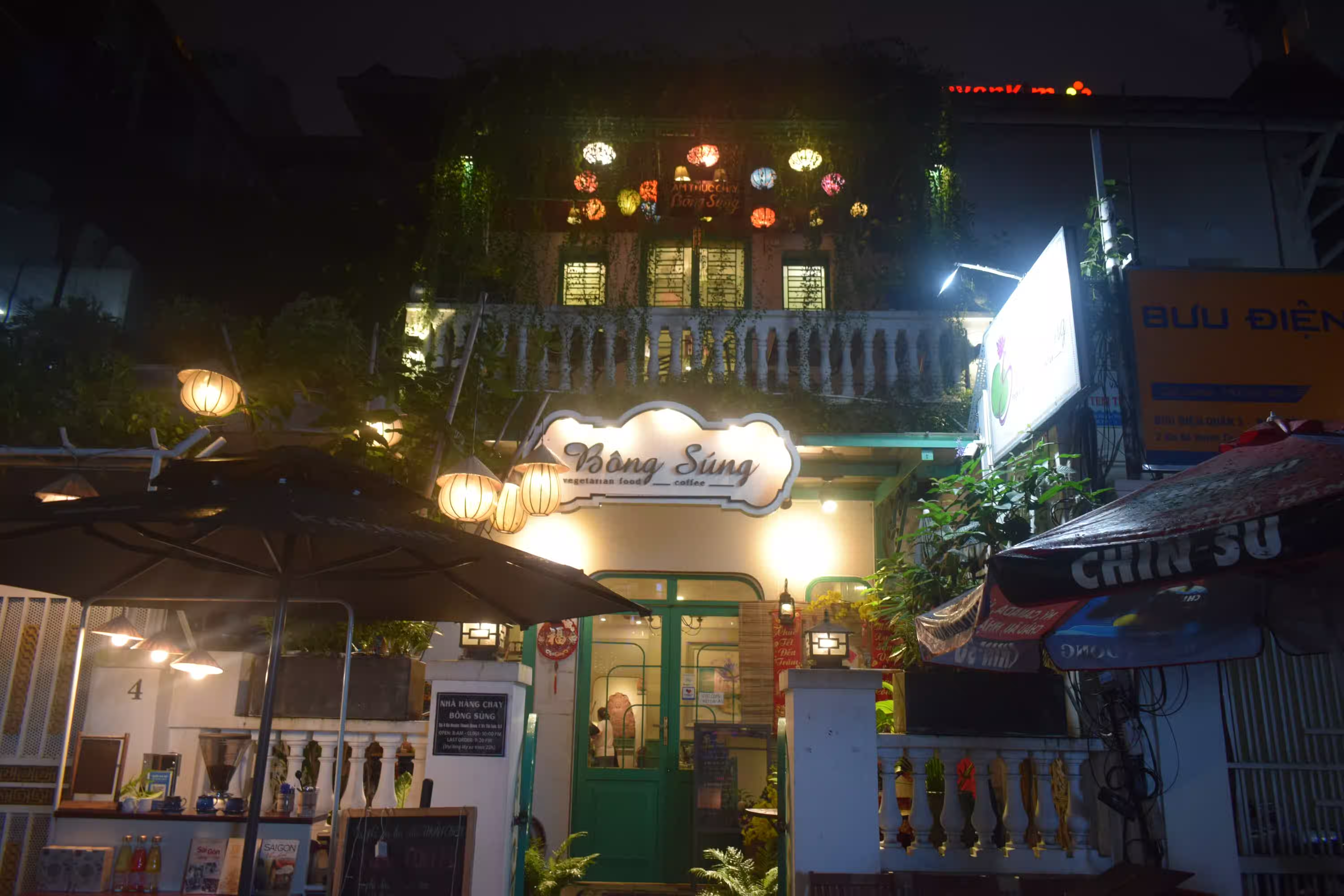
This is the restaurant Badri’s friend took us to. Photo by Ravi Dwivedi, released under CC-BY-SA 4.0.
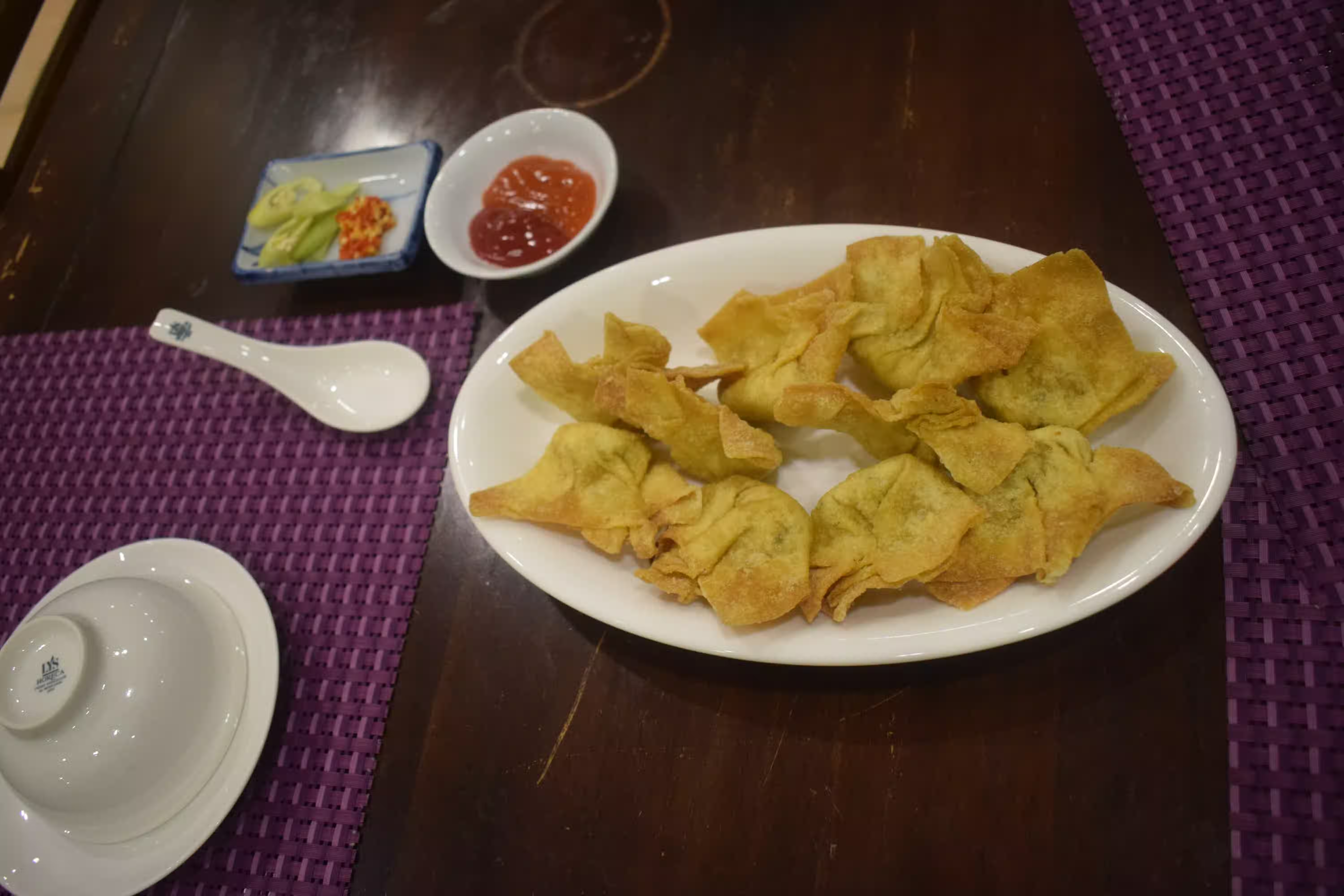
One of the dishes we had in the restaurant. This one was especially tasty. Photo by Ravi Dwivedi, released under CC-BY-SA 4.0.
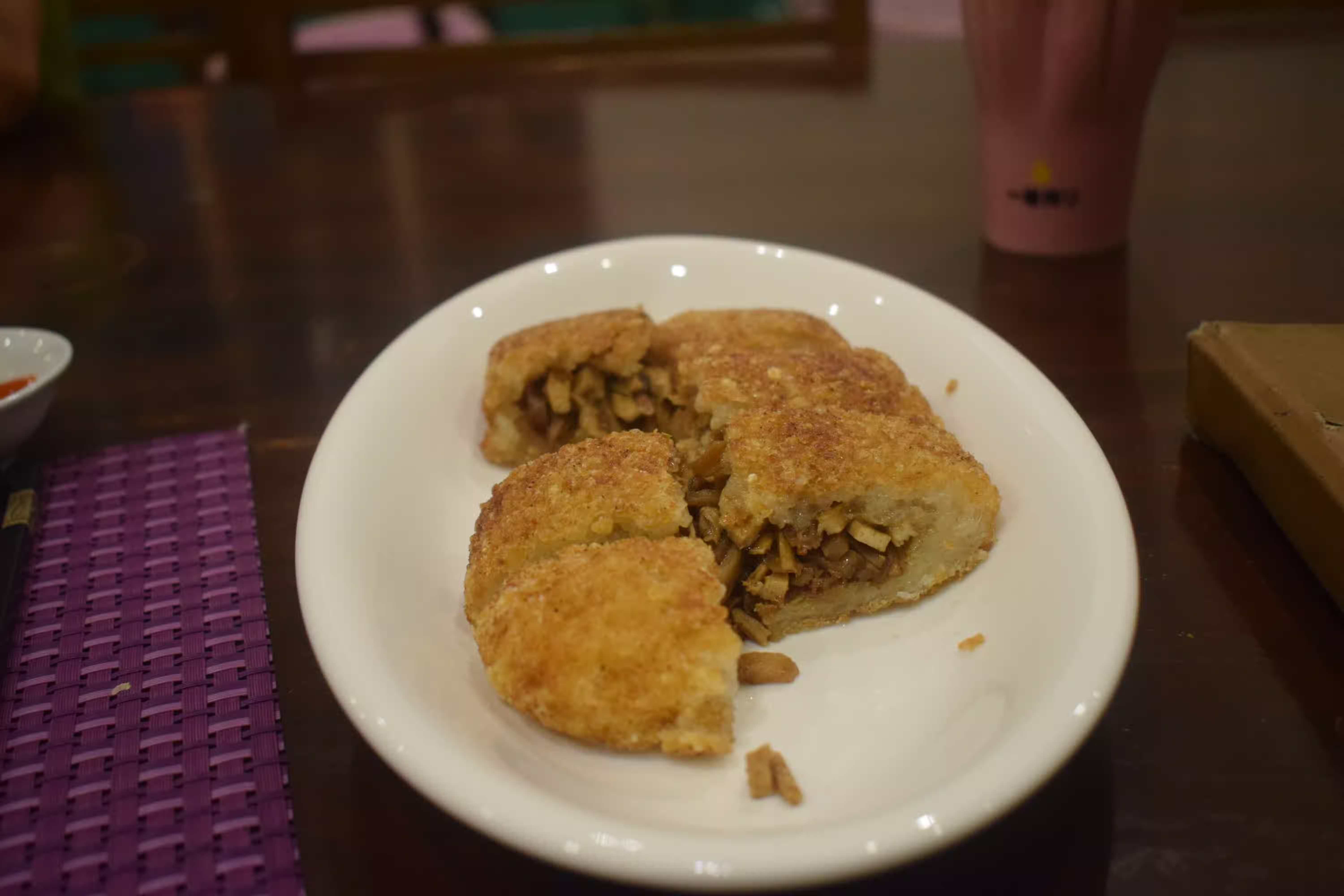
One of the dishes we had in the restaurant. Photo by Ravi Dwivedi, released under CC-BY-SA 4.0.
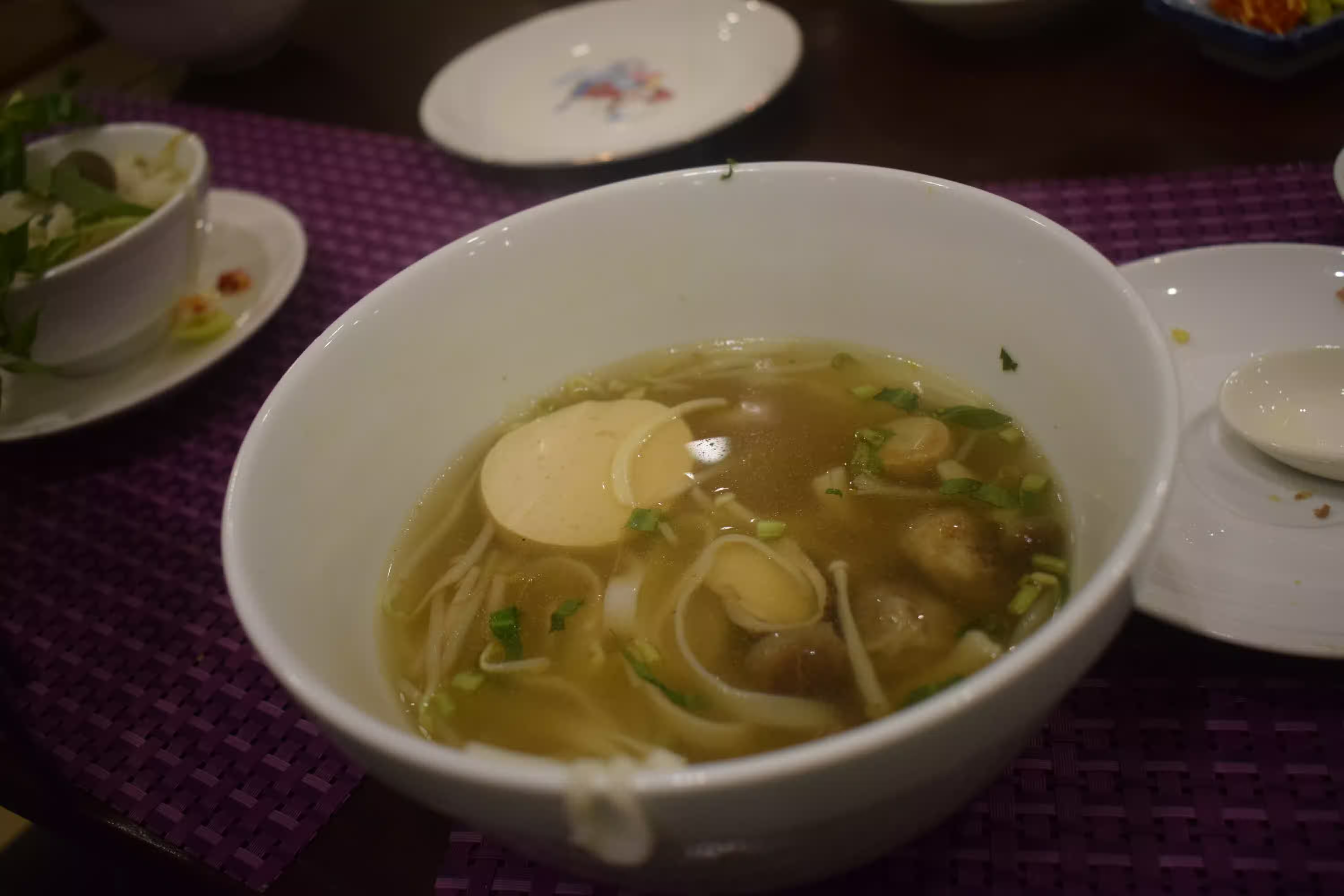
These noodles are called Pho and are very popular in Vietnam. Photo by Ravi Dwivedi, released under CC-BY-SA 4.0.
In the night, we went to a supermarket where I got myself some oranges and guavas. Then, we went to a Japanese restaurant where I didn’t have anything, as there was no vegetarian option available for me. Then we took a free bus to the place to Badri’s friend’s apartment. The construction company that built the apartment also runs this free bus service from their residential area to different parts of the city as a way of promoting their apartments. Anyone can take the bus, not just residents.
The next day, we took the free bus back to the city center and checked in to a hostel for a night. We took two beds in dormitories, which were 88,000 dongs (270 rupees) for each bed for a night. In Vietnam, if you can spend around 300 rupees per night, you can get a bed in a decent hostel.
Train from Ho Chi Minh City to Nha Trang
On the night of the 15th of December 2024, we boarded a train from Ho Chi Minh City to Nha Trang. The ticket for each of us was 519,000 dongs (1600 Indian rupees). The train name was SNT2. When we reached the Ho Chi Minh City train station, we noticed that the station was rather small by Indian standards.
After entering the train station, we went inside to the first platform, where the tickets were checked by a staff member. Ho Chi Minh City was the originating station for our train, so our train was already standing at the station. We had to cross the railway tracks on foot to reach the platform our train was on. Then we located our coach, where a ticket inspector was standing at the gate. He let us in after checking our tickets. In all these instances, we just had to show our digital boarding pass which we had received by email.
Unlike Indian trains, the train didn’t have side berths. Additionally, I liked the fact that it had a dedicated space to put our bags in, which was very convenient. The train departed from Ho Chi Minh City at 21:05 and arrived in Nha Trang at 05:30 in the morning.
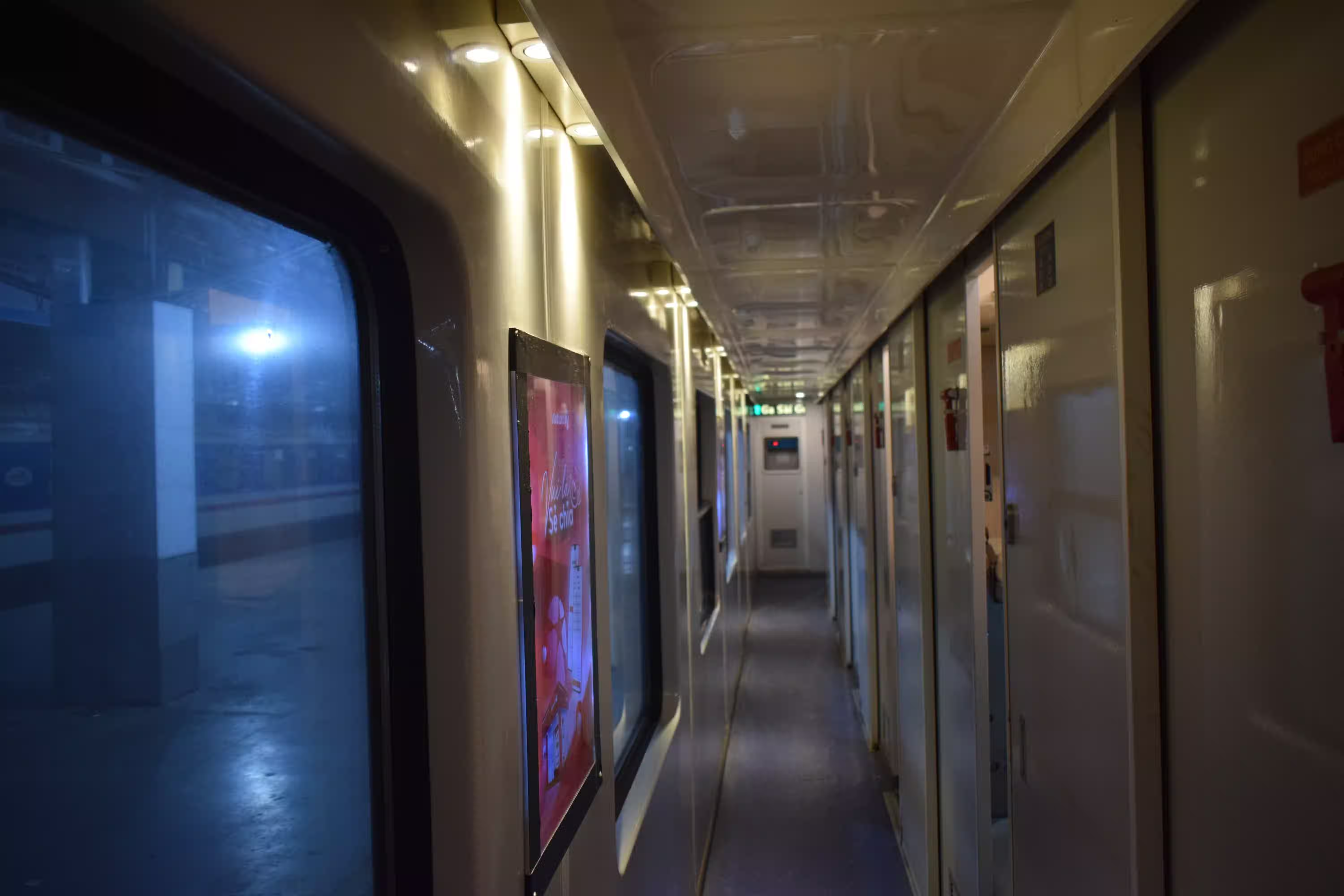
Interior of our train coach. Trains in Vietnam don’t have side berths, unlike India. Photo by Ravi Dwivedi, released under CC-BY-SA 4.0.
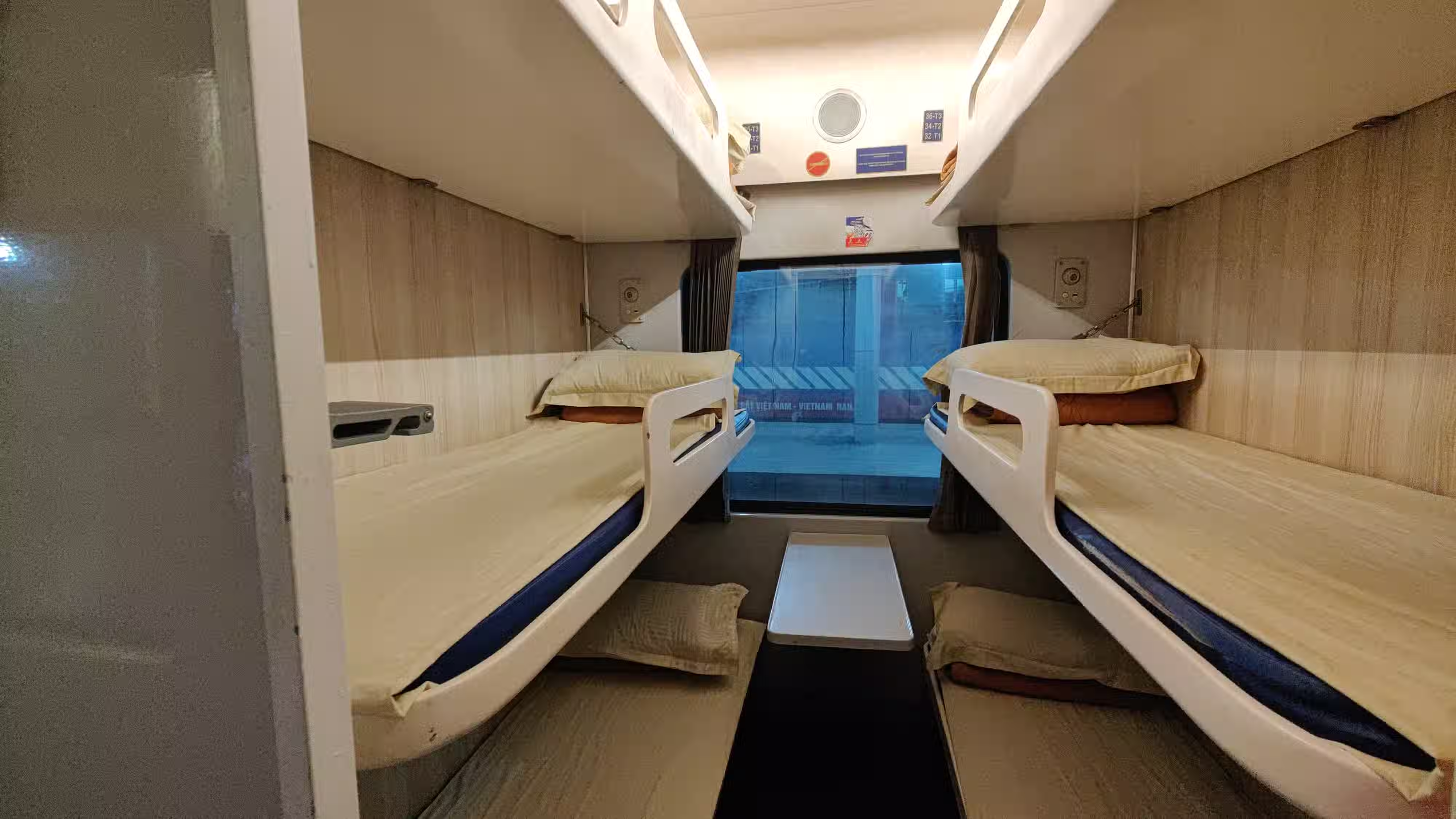
A picture of the berths from our coach. It had three tiers, similar to a 3 AC coach in Indian trains. Photo by Ravi Dwivedi, released under CC-BY-SA 4.0.
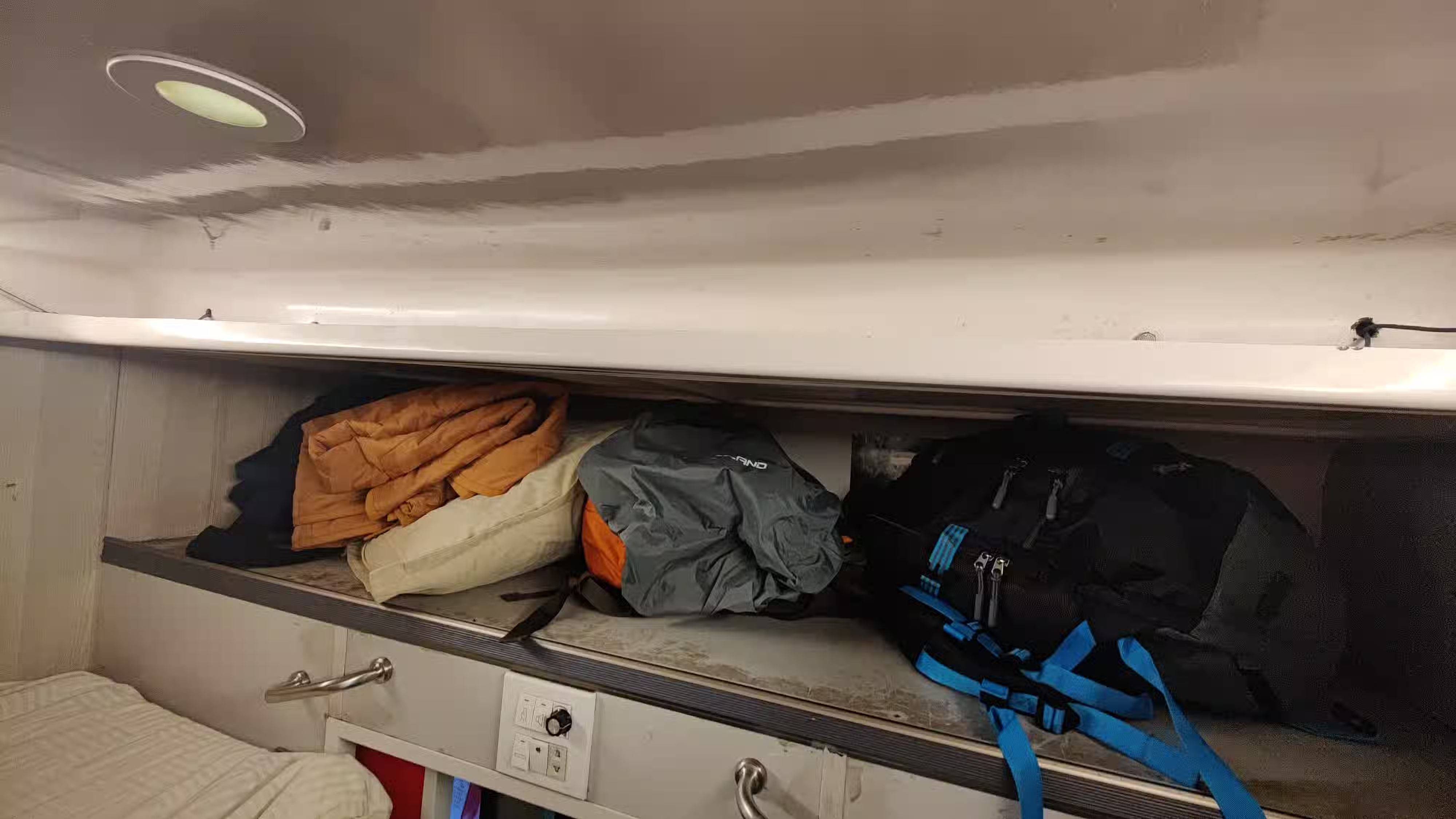
The train had a cabin to put the bags in. Photo by Ravi Dwivedi, released under CC-BY-SA 4.0.
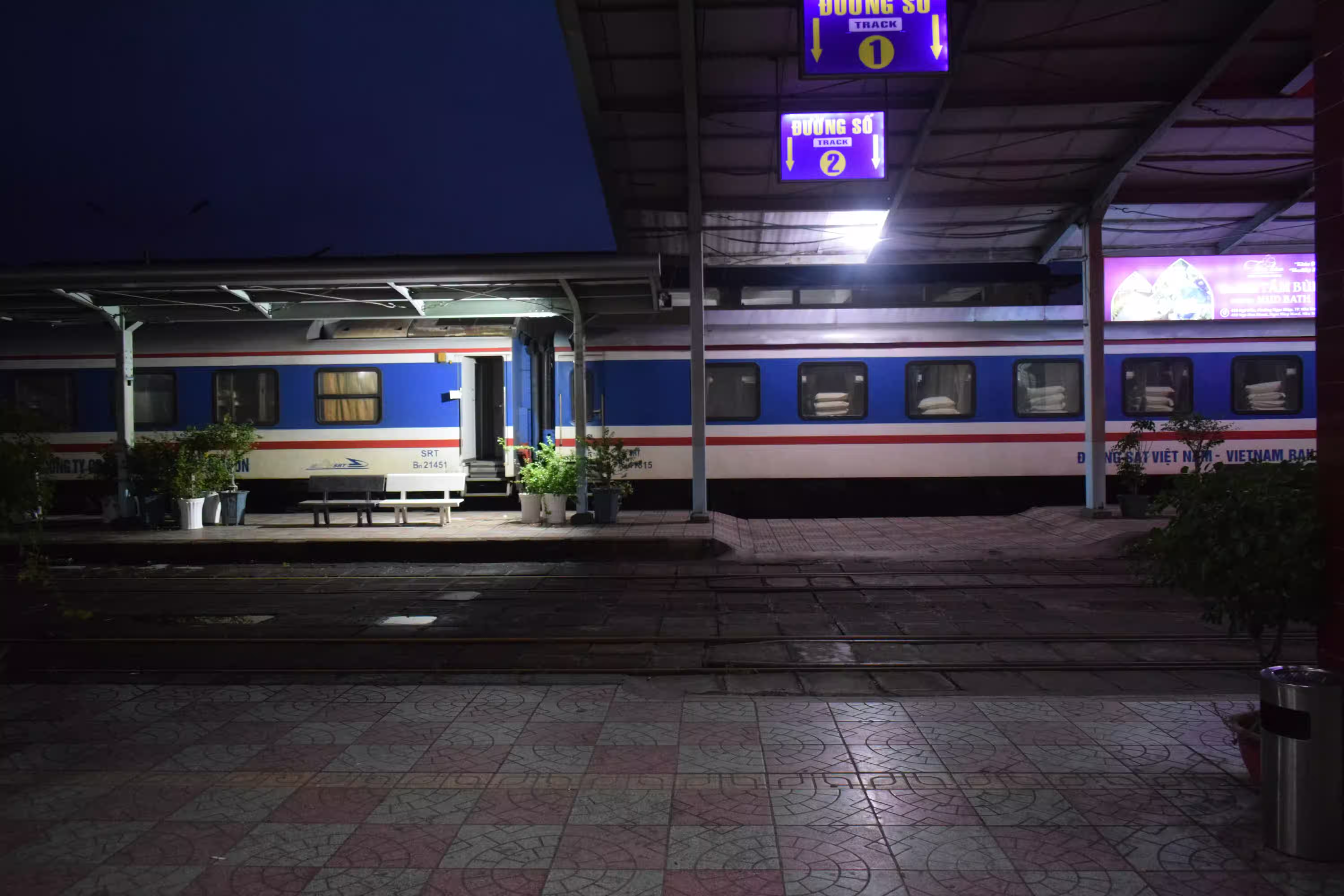
Nha Trang train station. Photo by Ravi Dwivedi, released under CC-BY-SA 4.0.
Nha Trang
Nha Trang is a coastal place, and we planned to go to a beach. We figured out that the bus to the airport goes can drop us near the beach. Therefore, we went to the bus station to get to the airport bus. The bus station was walking distance from the railway station. So, we decided to walk.
On the way, we stopped at a small shop for a coffee. The shop also gave a complimentary cup of green tea along with the coffee. I found out later that it is common for local shops to give a cup of complimentary green tea in Vietnam.
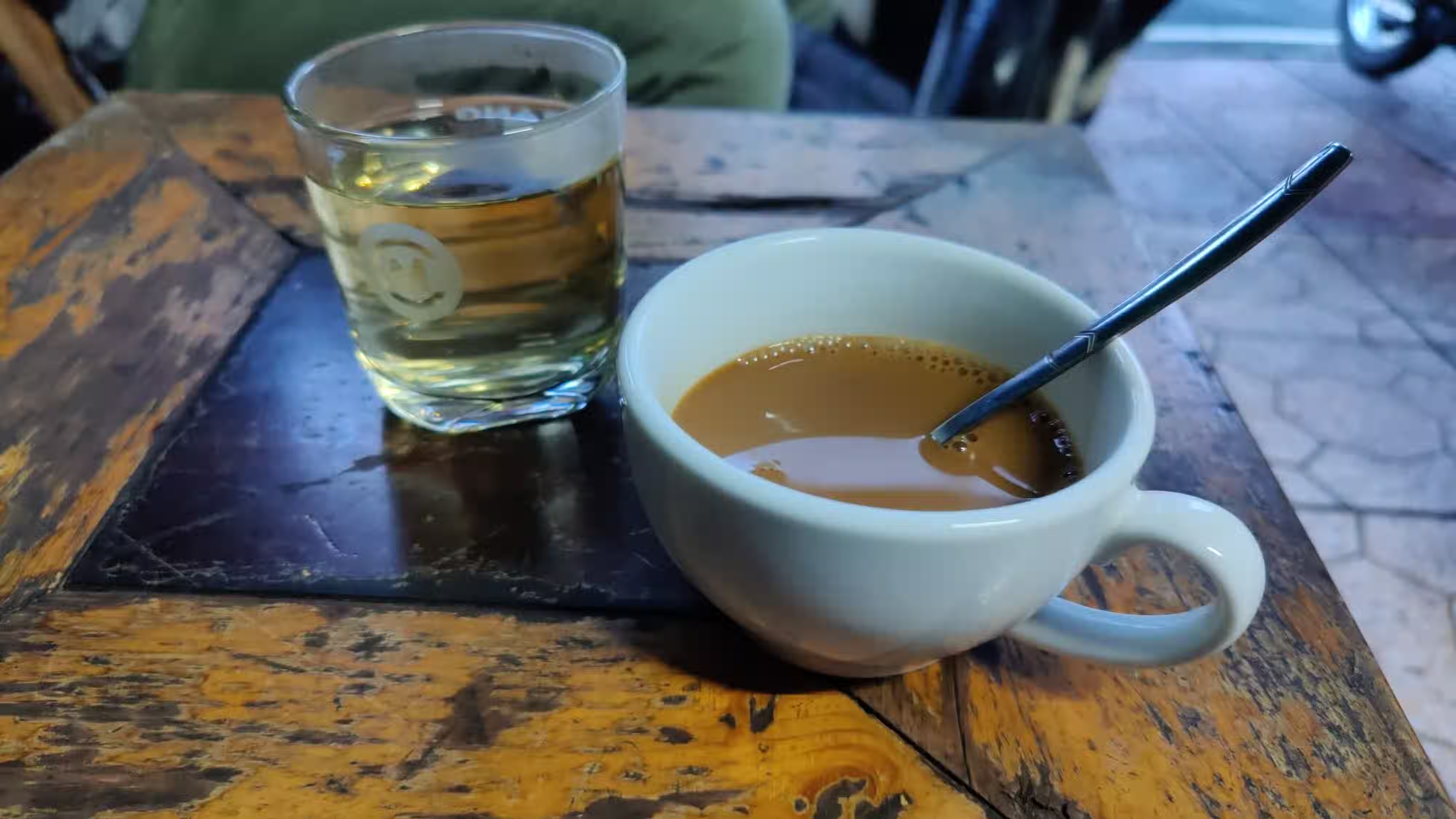
I got a complimentary cup of green tea along with coffee in Nha Trang. In this trip, Badri and I found out that this is customary at local places in Vietnam. Photo by Ravi Dwivedi, released under CC-BY-SA 4.0.
Soon we reached the bus station and took a bus to the beach. It was 65,000 dongs (₹200). After getting down from the bus, I had coconut water and some eggs at a small local place.
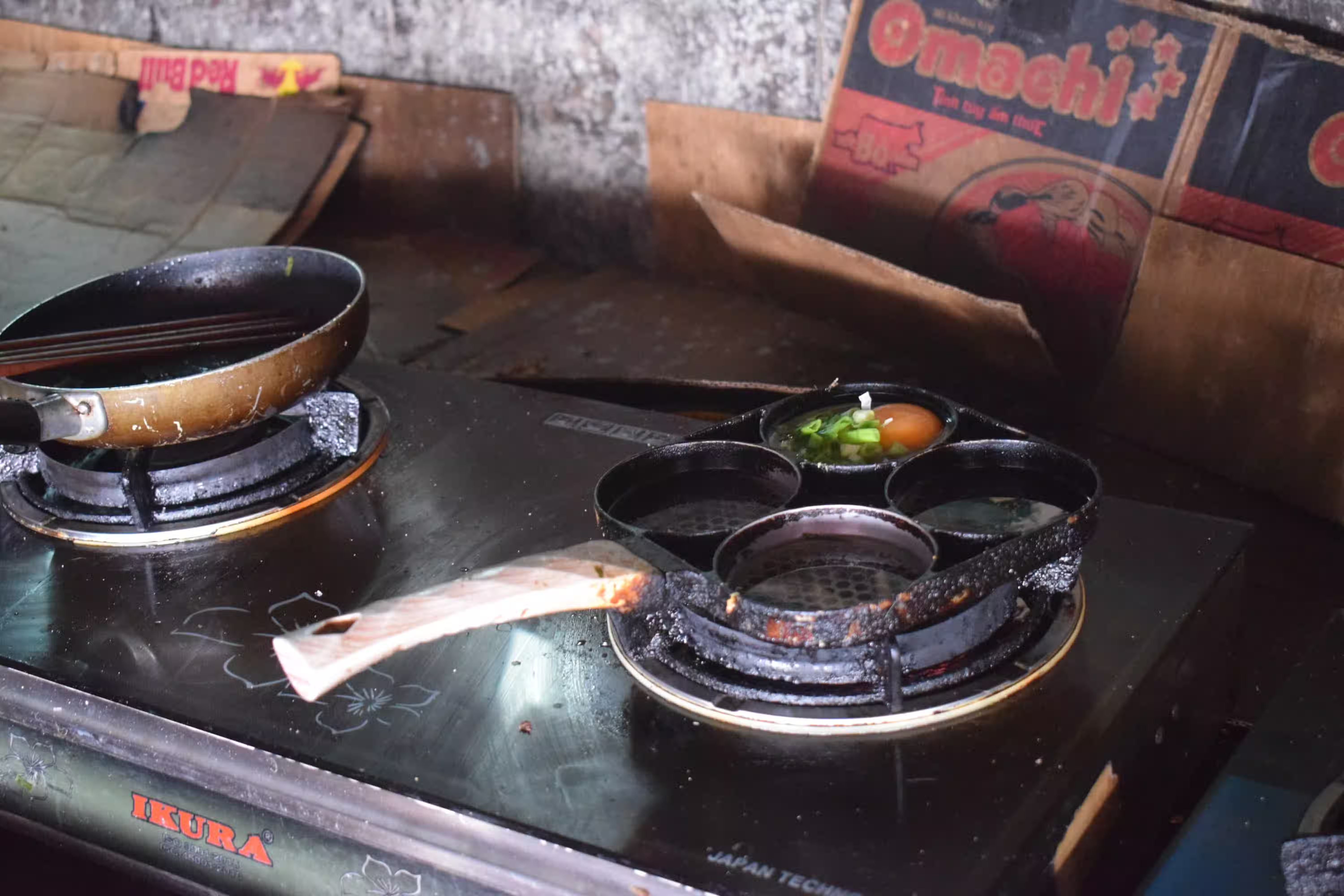
Eggs being cooked on a pan for my order. Photo by Ravi Dwivedi, released under CC-BY-SA 4.0.
Then we went to the beach, but nobody else was there. We spent some time there and went back to the place where the bus dropped us as it started raining. We couldn’t find a bus for some time. A taxi driver approached us and agreed to take us to the city center for 200,000 dongs (₹650). For reference, the place where he dropped us was 35 km from the place we took the taxi. Taxi fares in Vietnam were also cheap!
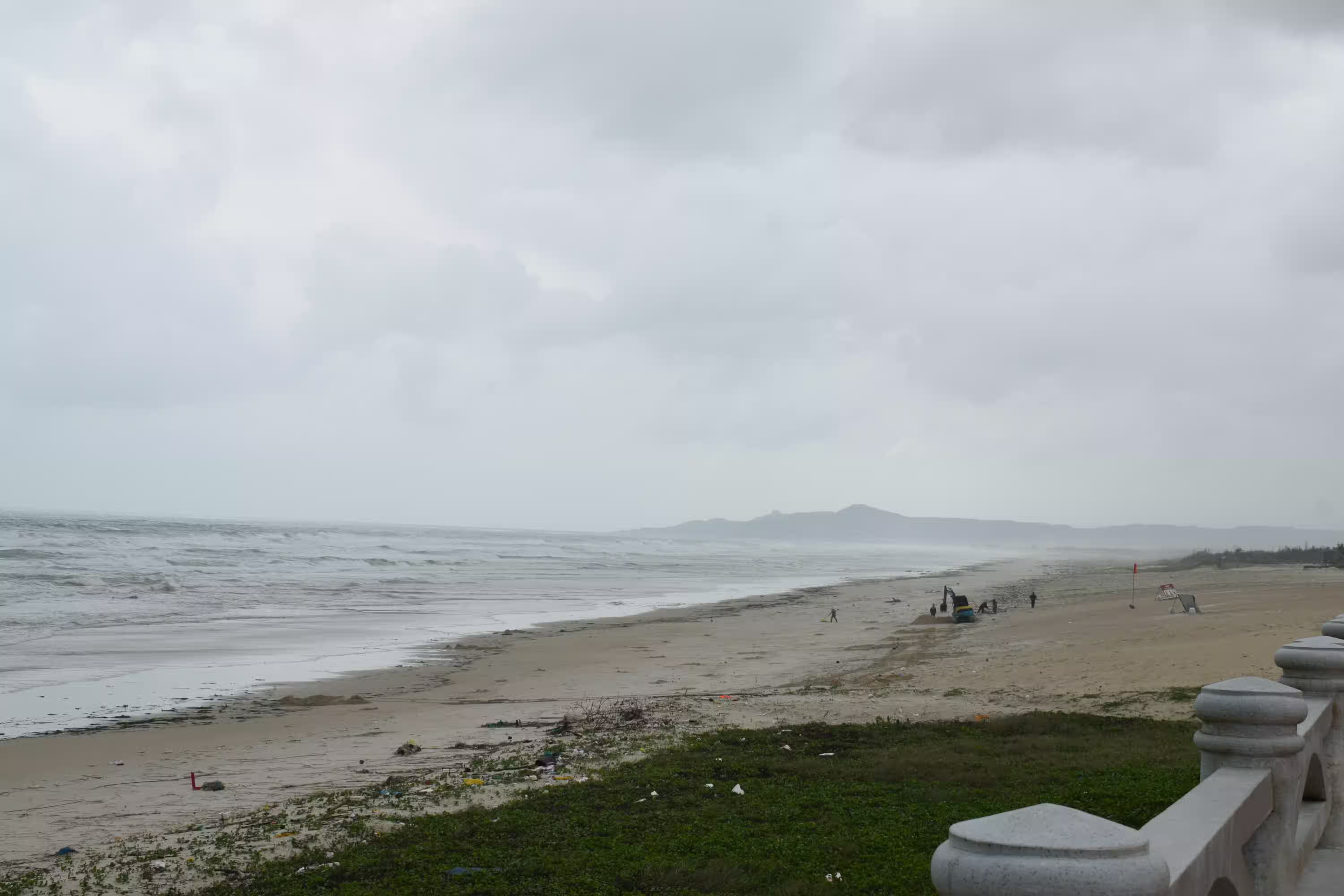
The beach we went to in Nha Trang. Photo by Ravi Dwivedi, released under CC-BY-SA 4.0.
Nha Trang was a beautiful place, and so we roamed around for a while. Then we stopped at a Highlands Coffee branch for a while. Since Christmas was coming up, the café had a Christmas tree, and I liked the Christmas vibes. They were playing Mariah Carey’s All I Want for Christmas Is You.
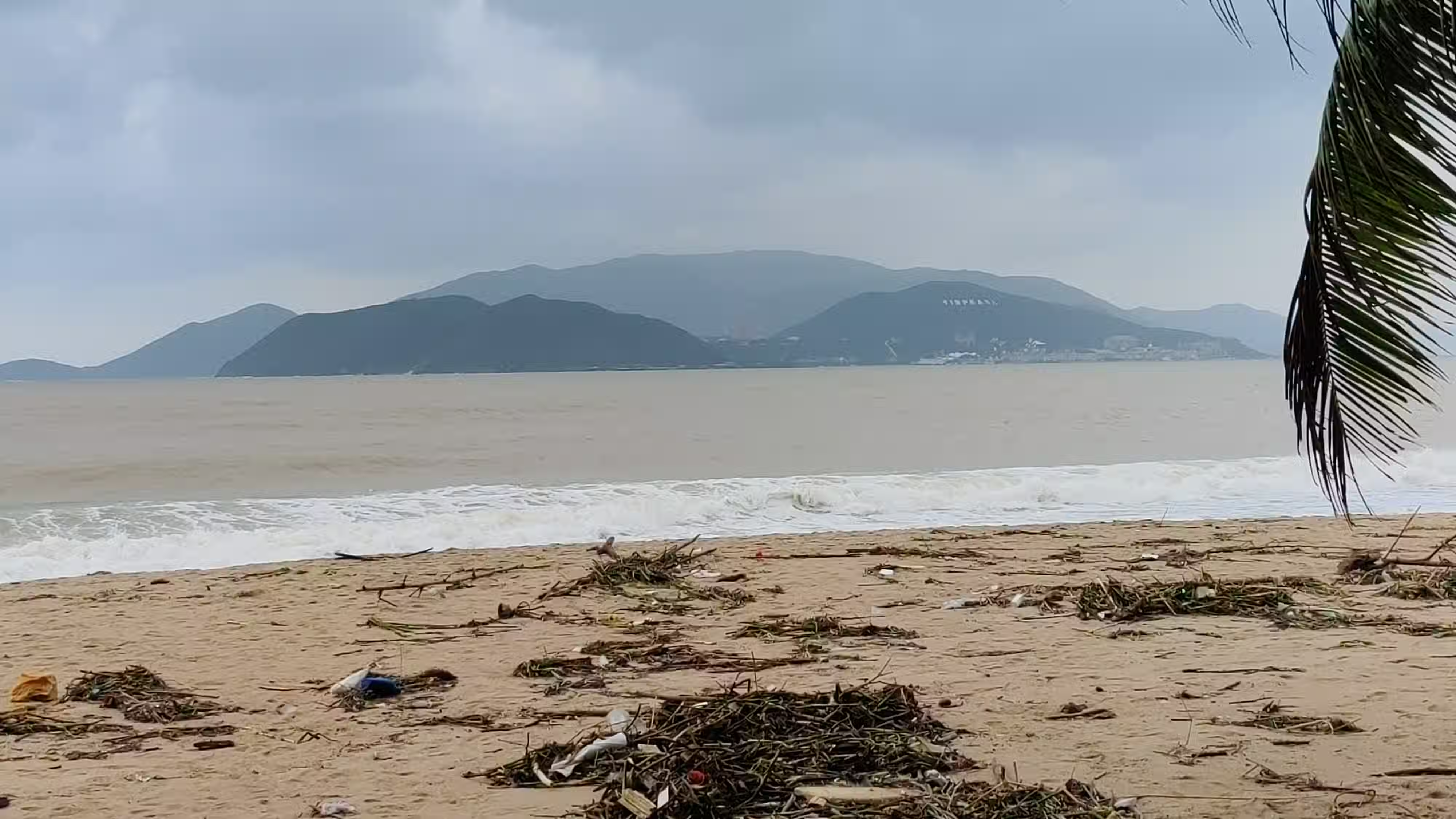
This one was shot in the city center. In this trip, Badri and I found out that this is customary at local places in Vietnam. Photo by Ravi Dwivedi, released under CC-BY-SA 4.0.
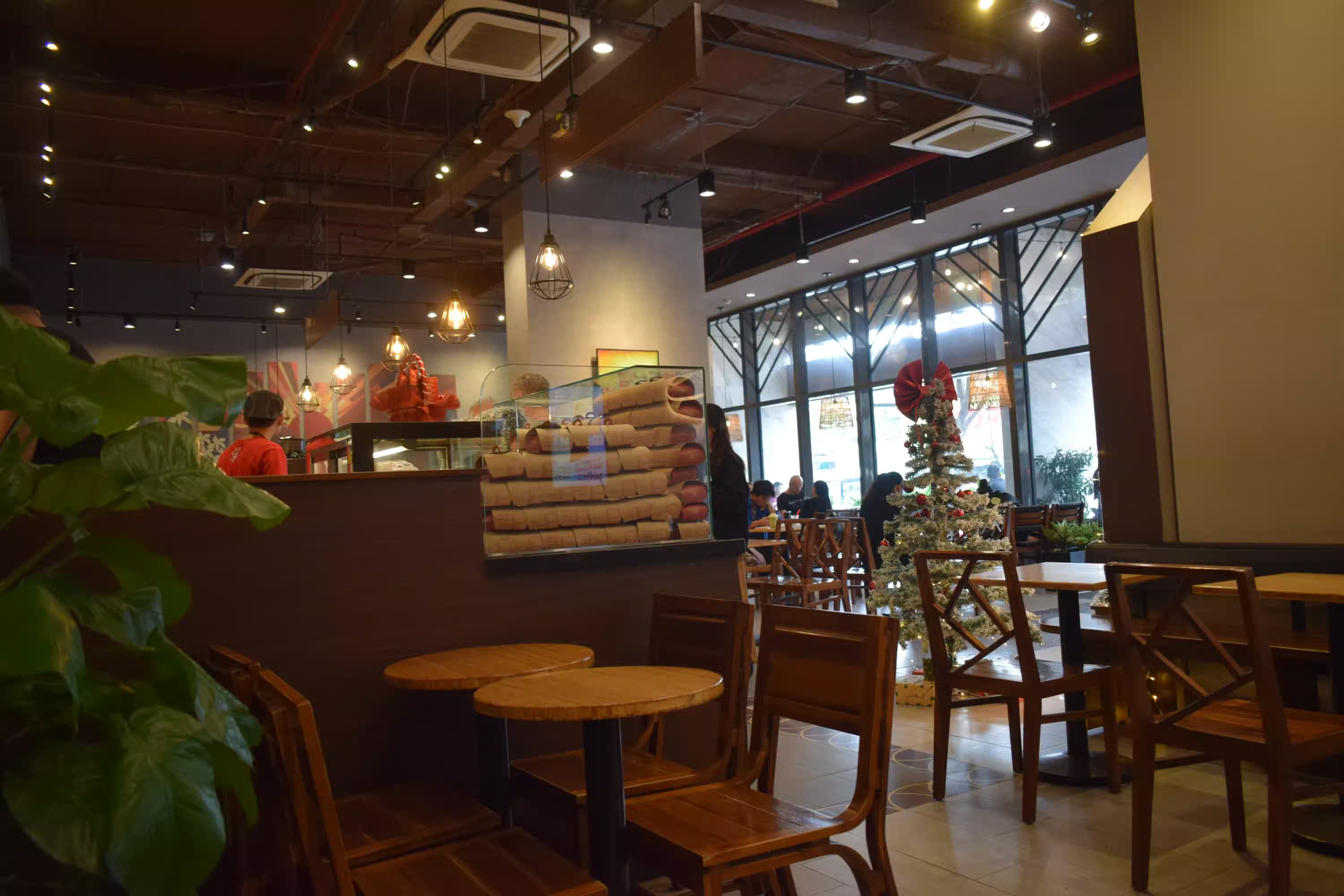
Inside a Highlands Coffee cafe in Nha Trang. Photo by Ravi Dwivedi, released under CC-BY-SA 4.0.
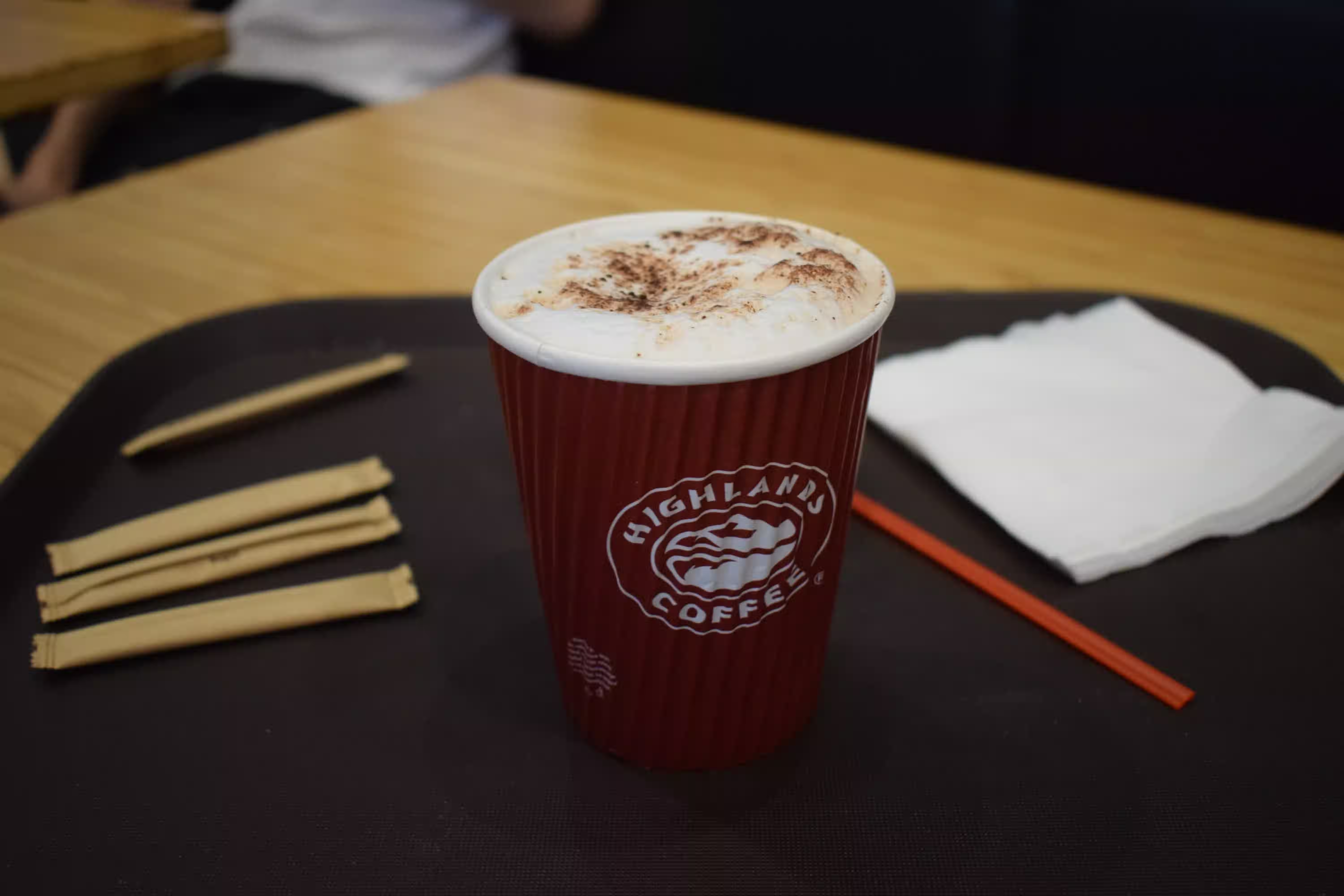
A coffee I got from Highlands Coffee in Nha Trang. Photo by Ravi Dwivedi, released under CC-BY-SA 4.0.
During the evening, we went to a local place to eat. The place mentioned “Chay” in its name, and you know what it means—it was a vegan place. There was a man there and no other customers. I don’t remember the names of the dishes we ordered, but it was a bowl of soupy noodles and a bowl of dry noodles. They were very tasty. To top that off, the meal was a total of 55,000 dongs (₹180) for both of us.
The host was welcoming and friendly. We had a nice conversation with the host. In Vietnam, restaurants give chopsticks to eat noodles. While Badri was good at using them, I wasn’t. So, the host of this restaurant helped me in using chopsticks. Although my technique was not perfect and I take a bit of time, I could now eat solely with chopsticks.
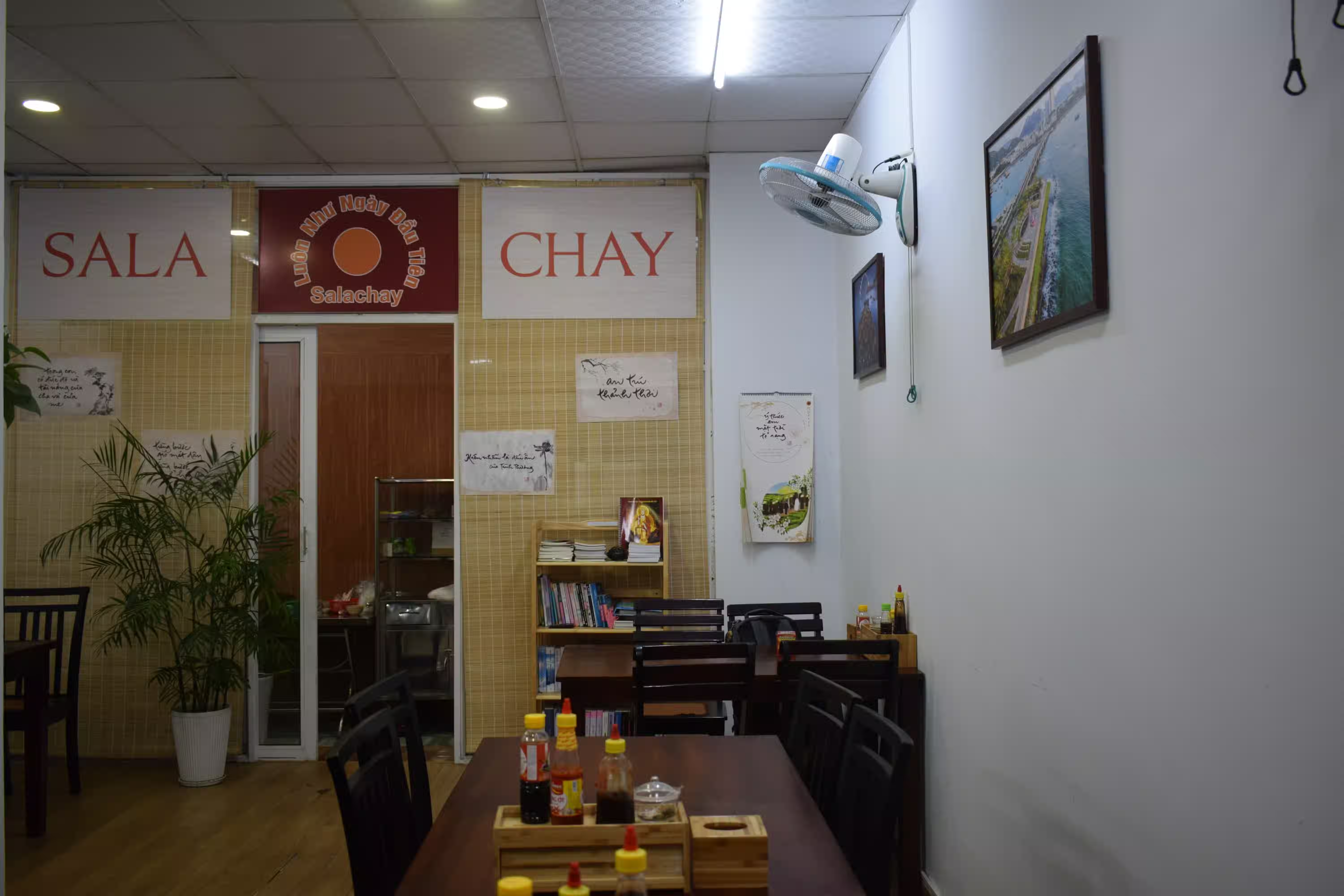
The restaurant we went to in Nha Trang. The word Chay in the name means it was a vegan restaurant. Photo by Ravi Dwivedi, released under CC-BY-SA 4.0.
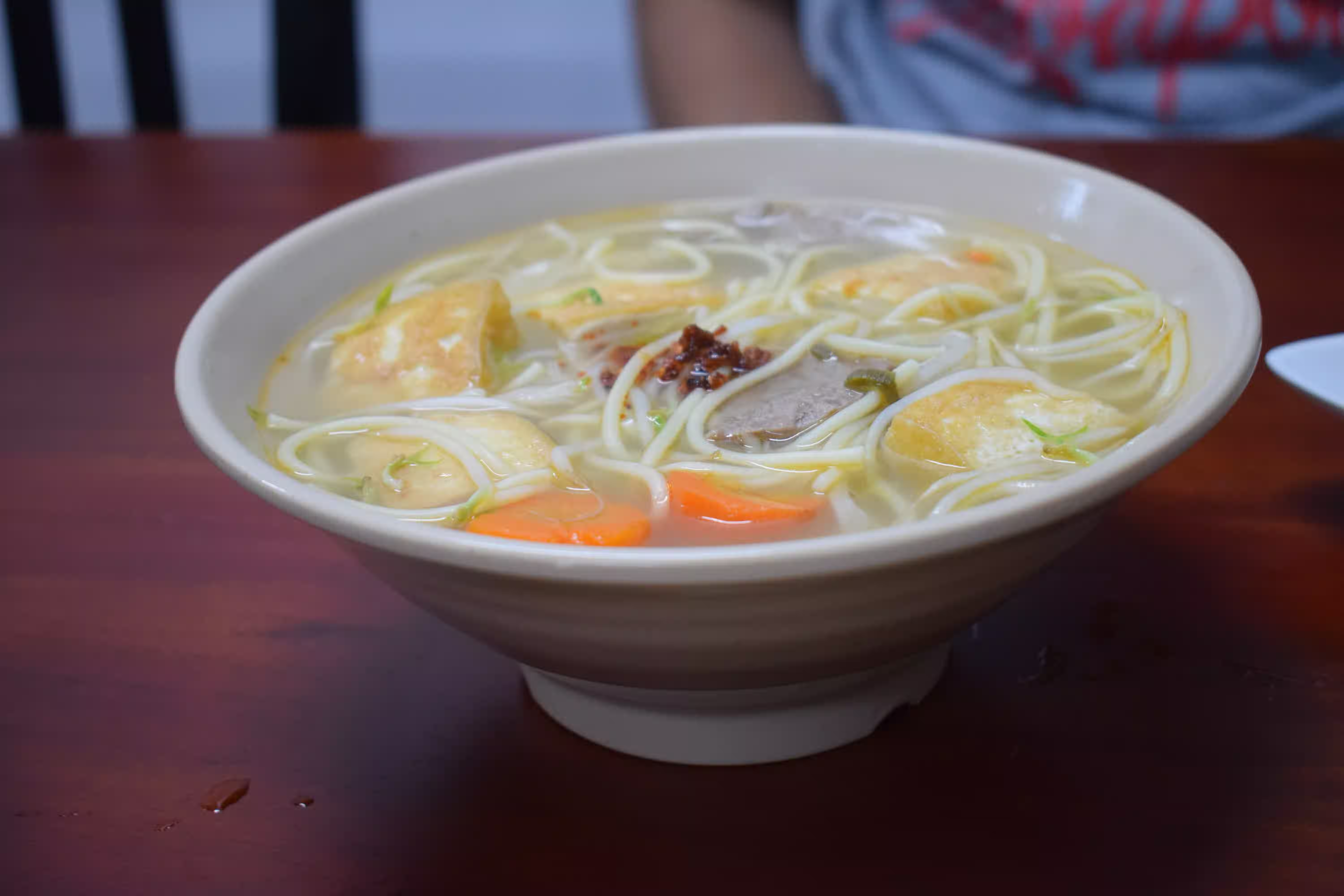
Soupy noodles we got at that restaurant. Photo by Ravi Dwivedi, released under CC-BY-SA 4.0.
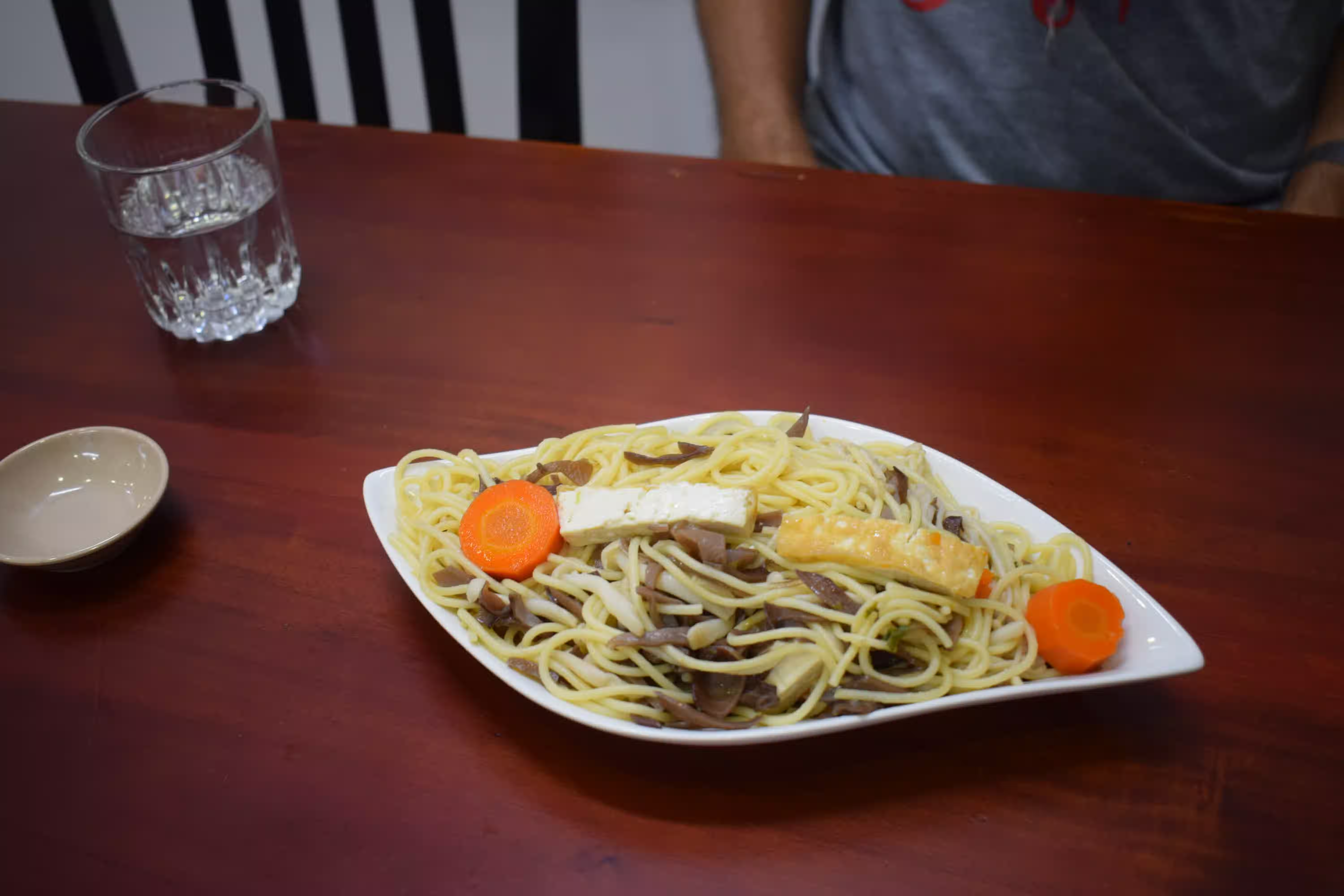
Dry noodles we got at that restaurant. Photo by Ravi Dwivedi, released under CC-BY-SA 4.0.
Our plan was to take a night bus to Hoi An, and we were hoping to find a bus stand. However, we couldn’t find one. Asking around about the pickup location of the Hoi An bus led us to many different locations. Finally, we ended up at a bus booking agency’s office where we found out that there were no tickets available for Hoi An.
At this point, we gave up on booking the bus and searched for trains instead. As we didn’t have a local SIM, we asked the agency to let us connect to their Wi-Fi so that we could look for trains. They were kind enough to let us do that. It also seemed like they were going to close the office in like 10 minutes.
Unfortunately, all the sleeper berths were booked from Nha Trang till Hoi An on the next train with only seating berths being available. It takes around 10 hours, so I wasn’t comfortable traveling on seating berths.
Here I came up with the idea to look for sleeper berths from an intermediate stop. Fortunately, there were sleeper berths available from the next stop, Ninh Hòa. Therefore, we booked a seating berth from Nha Trang to Ninh Hòa and a sleeper berth from Ninh Hòa to Trà Kiệu (the nearest railway station from Hoi An). The train name was SE6, and it was a total of 500,000 dongs per person (₹1600 per person).
So, we went to the Nha Trang railway station and boarded the train. We had to spend 40 minutes seated for the train to reach the next stop before we could go to our sleeper berths. Badri had some friendly co-passengers on that trip who gave him Saigon beer and some crispy papad-like thing. They offered me as well, but I thought it was non-veg, so I declined it.
Hoi An
On the morning of 17th December 2024, we got down at the Trà Kiệu station at around 09:30. Our hostel was in Hoi An, which was around 22 km from the station. There was no public transport to get there.
Instead, there was a taxi driver at the train platform. We told him the name of our hostel, and he quoted 270,000 dongs (around ₹850). We said it was too expensive for us, so he agreed to bargain at 250,000 dongs. At this point, we told him that we could give him no more than 200,000 dongs, but he didn’t agree.
Badri tried a trick. He asked the driver to show us prices in the Grab app (a popular taxi booking app in Southeast Asia). Unfortunately, the Grab app showed 258,000 dongs, which was more than the fare the driver agreed to.
So we walked away as if we had so many options (we didn’t!) to reach the hostel. We got out of the station and stopped at a small shop outside to have some coffee. As is customary in Vietnam, we got a complimentary green tea here as well.
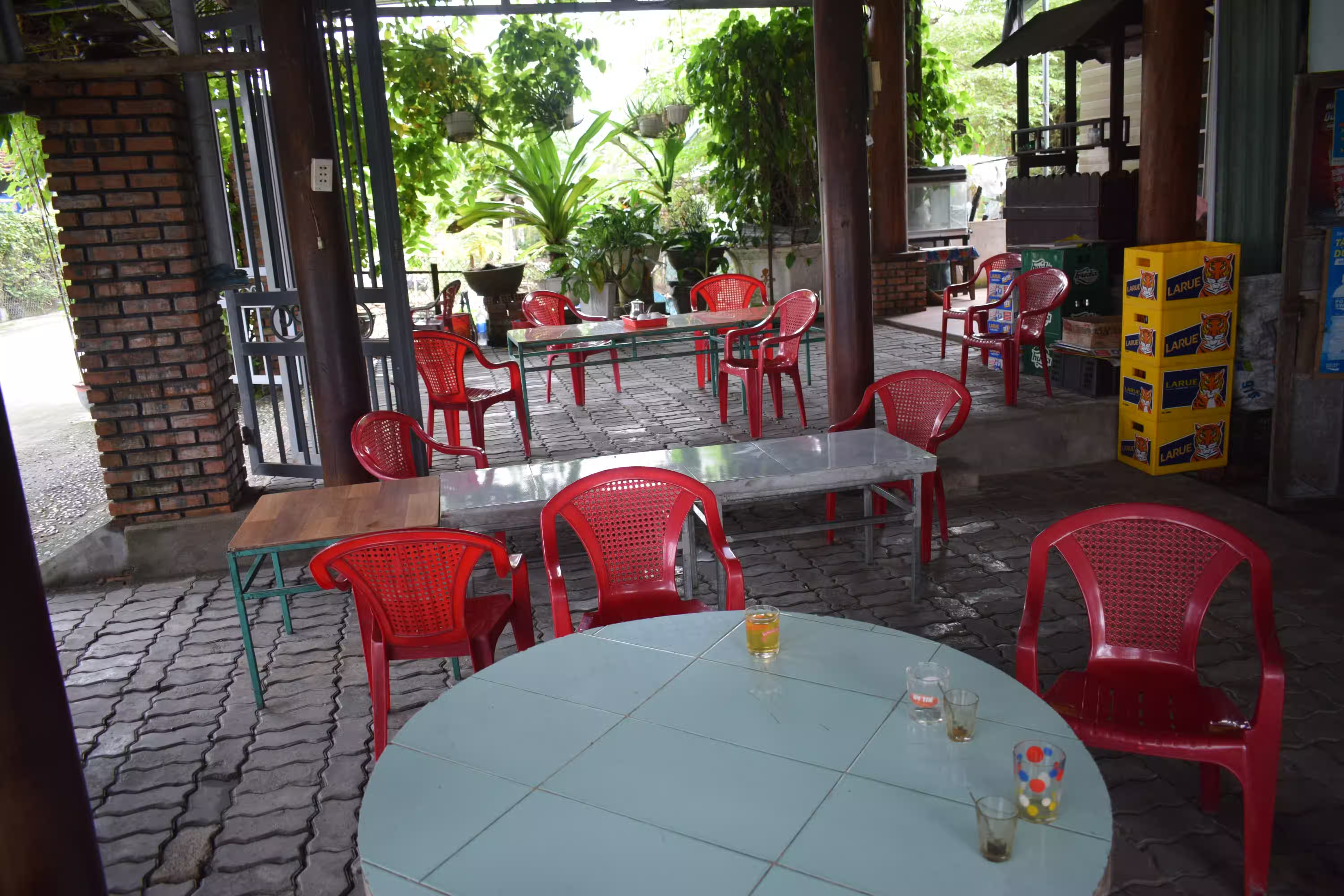
This was the place we had our coffee in Tra Kieu. Photo by Ravi Dwivedi, released under CC-BY-SA 4.0.
That taxi driver also joined us and sat in that shop. He started talking with the locals in the shop in the local language. The taxi driver was insistent on taking us to Hoi An for 250,000 dongs. At this point, Badri told the taxi driver (by the use of translation software) that we usually use public transport during our trips, and we aren’t used to paying high prices to get around. So, he can drop us somewhere in Hoi An for 200,000 dongs as we don’t mind walking a bit to reach our hotel.
After reading this, the taxi driver agreed to take us to our hostel for 200,000 dongs (₹660). He also had me take a picture with Badri after this. I think such a bargain tactic would not work in India.
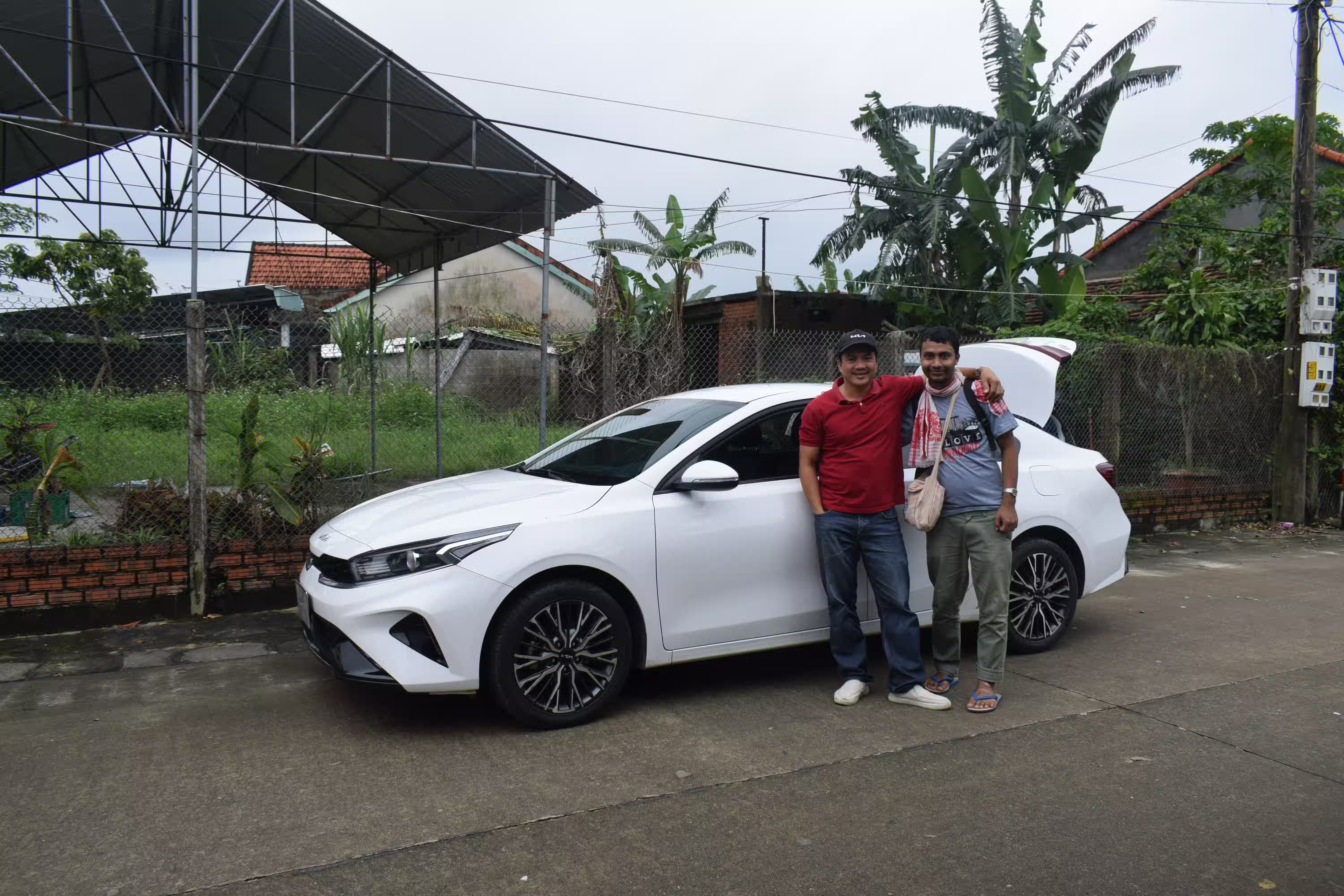
Photo of Badri with taxi driver. Photo by Ravi Dwivedi, released under CC-BY-SA 4.0.
The nice thing we noticed in Vietnam is, once bargaining is done and the deal is settled, people don’t try to bargain more or keep on talking about the subject. Before the deal, the driver was being somewhat insistent and argumentative, but after the deal was done, it was as if no argument had happened at all.
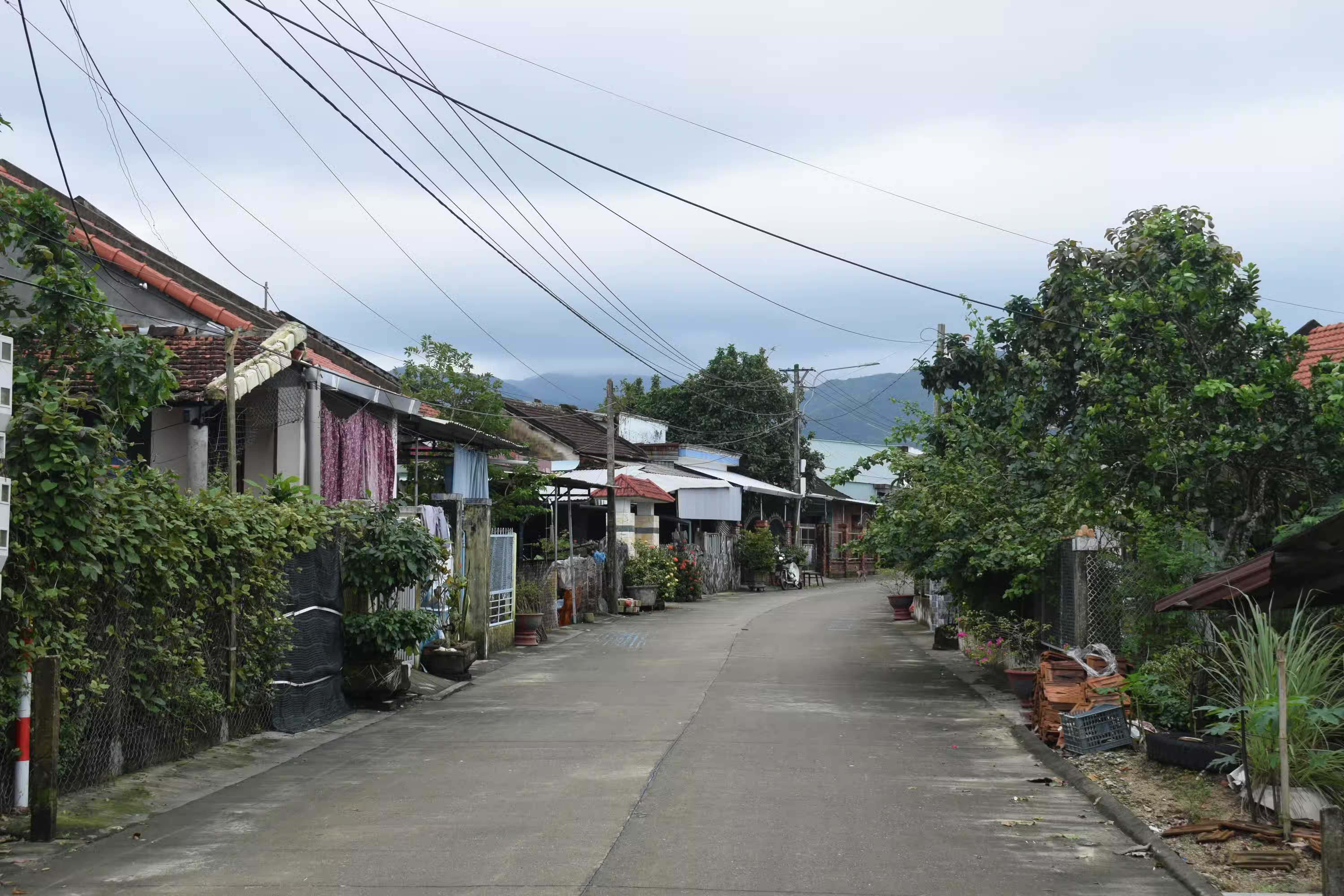
A picture of Tra Kieu area near the train station we got down at. Photo by Ravi Dwivedi, released under CC-BY-SA 4.0.
We were treated to some beautiful scenery on the way to our hostel. Soon we reached our place and completed all the formalities for checking-in. During the time our room was being prepared for check-in, we had an egg sandwich with coffee in the hotel. I found the egg sandwich very tasty. The bread looked like the French baguette. The hostel was ₹240 per night for each of us.
The name of the hostel was Bana Spa. We liked staying here and we can recommend it if you find yourself there. It is operated by a family.
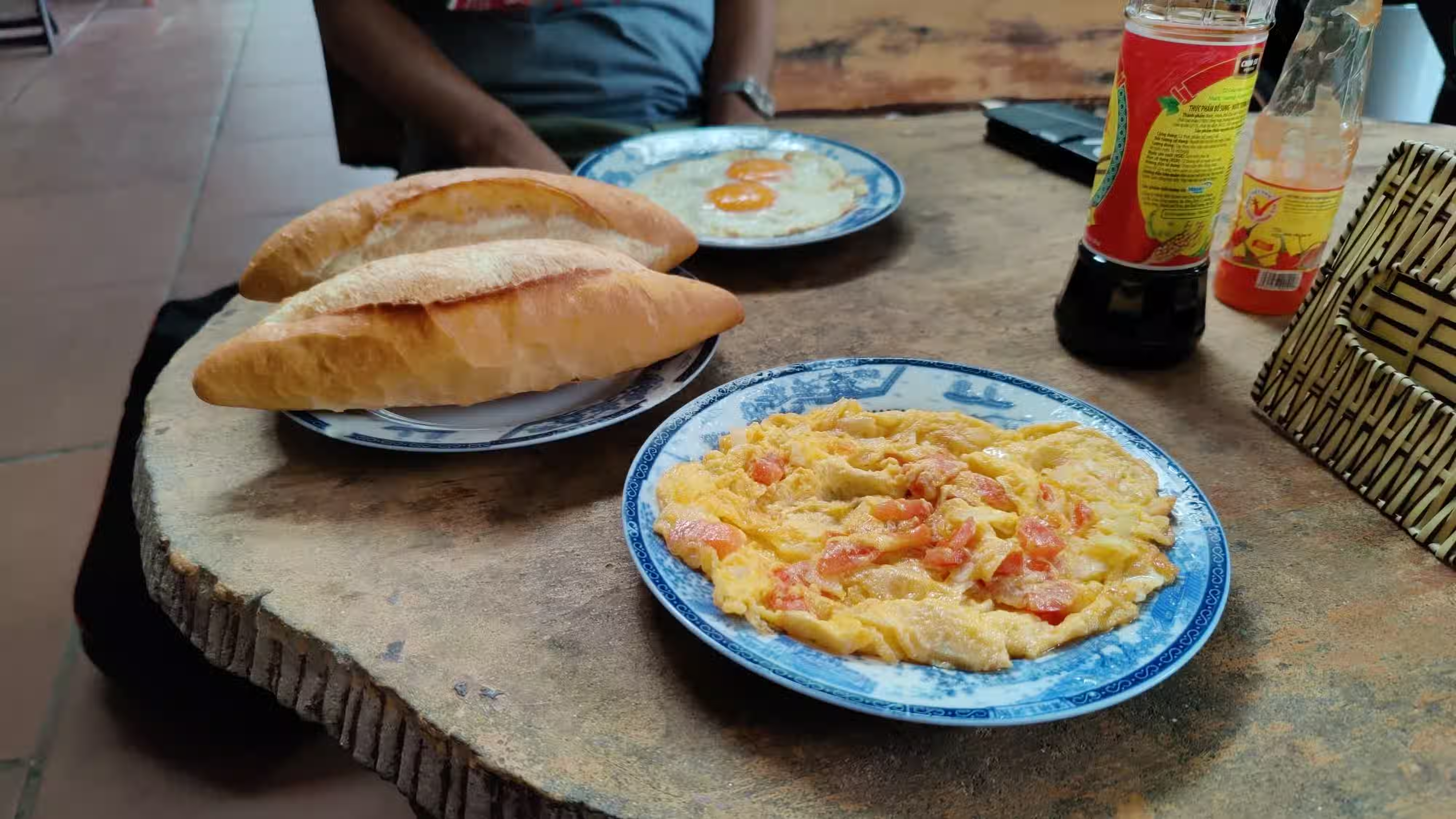
Our breakfast in Hoi An. Photo by Ravi Dwivedi, released under CC-BY-SA 4.0.
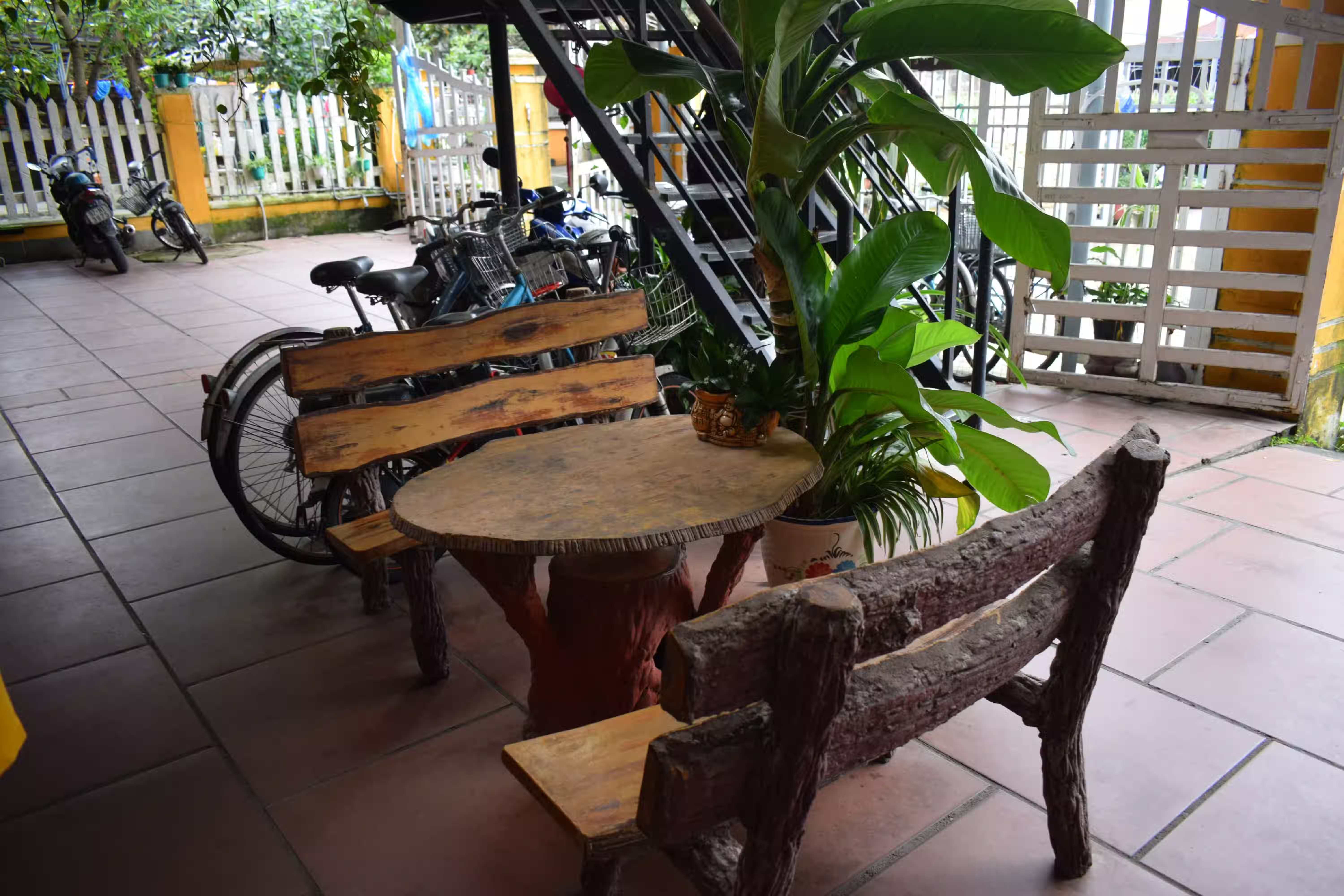
A photo of the hostel we stayed in Hoi An. Photo by Ravi Dwivedi, released under CC-BY-SA 4.0.
We also rented a bicycle for each of us—25,000 dongs per day (₹80)—and explored the old town during the evening. Hoi An is popular for Vietnamese silk. Tourists come here to buy fabric and get it done by the tailor. The buildings here looked old, and they were painted in yellow with a gabled roof.
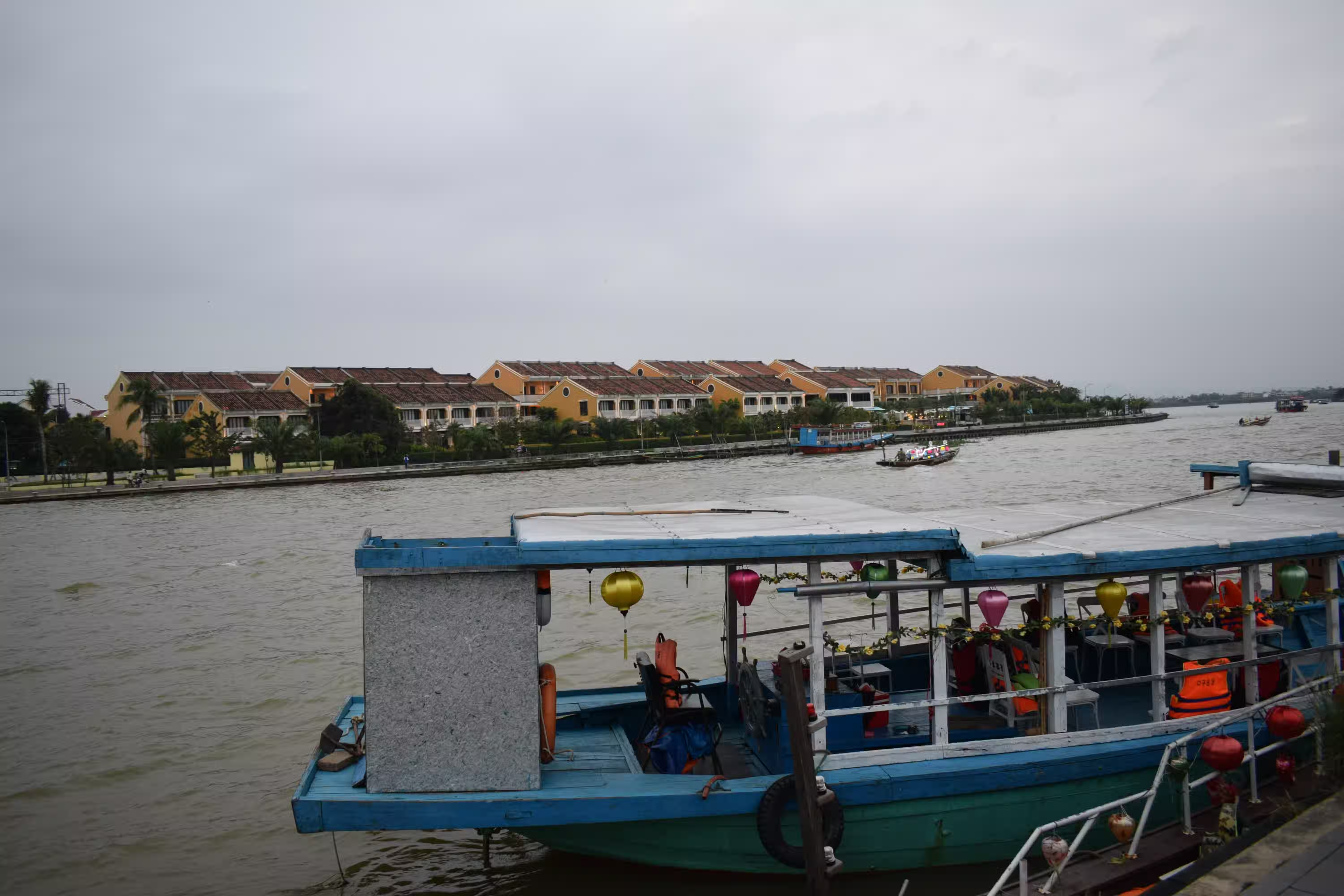
Typical yellow house with gabled roof in Hoi An old town. Photo by Ravi Dwivedi, released under CC-BY-SA 4.0.
Here, I also had egg coffee for the first time, and I liked it. Egg coffee is a delicacy of Hanoi, but you can get it in other parts of Vietnam. If you find yourself in Vietnam, then I recommend you try egg coffee. We also bought some cool T-shirts and other souvenirs, such as a Vietnamese hat, from here.
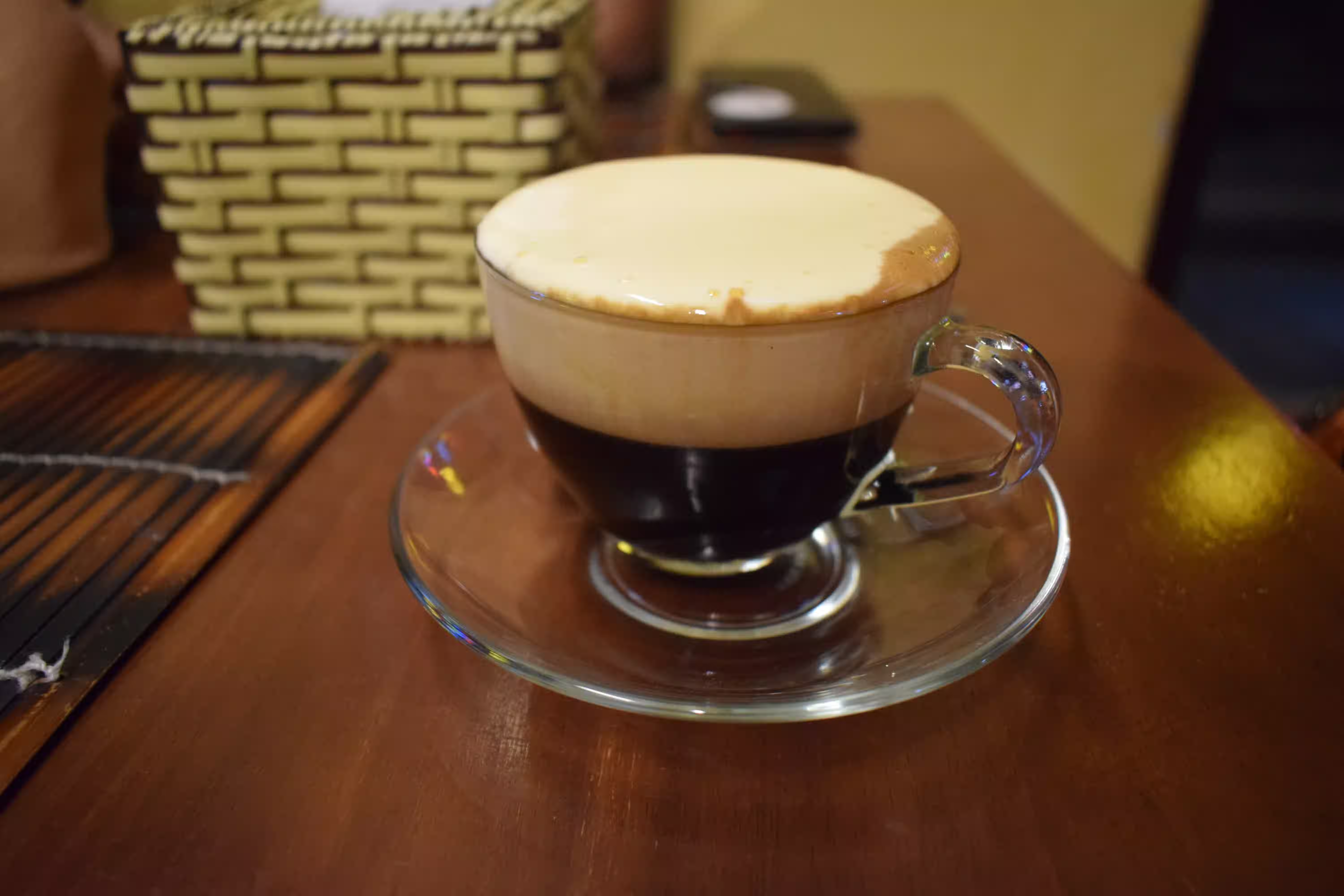
Egg coffee I had in Hoi An. Photo by Ravi Dwivedi, released under CC-BY-SA 4.0.
Hue
The next day—the 18th of December 2024—we went to Hue by bus. As we could not take a bus on our own in Nha Trang, we asked the hostel to book it for us this time. We booked it a day before, and they told us to be ready by 07:00 in the morning. At 07:00, a minibus arrived, which took us to a bus agency’s office. There we waited for a few minutes and got into the bus to Hue.
The bus had sleeper seats, so I took the opportunity to catch some sleep. The ride was comfortable, so I am assuming the roads were good. In a couple of hours, we reached Hue. Again, we went to Highlands Coffee to have some coffee, charge our phones, and use the internet, not to mention using the bathrooms.
During the afternoon, we went to a local restaurant named Quán Chay Thanh Liễu. It was a vegan restaurant (remember the thing I mentioned earlier about “Chay” being in the name?). On the way, we had a steamed dumpling shaped like a momo called banh bao from a street vendor. It wasn’t very good, but I found it worthwhile.
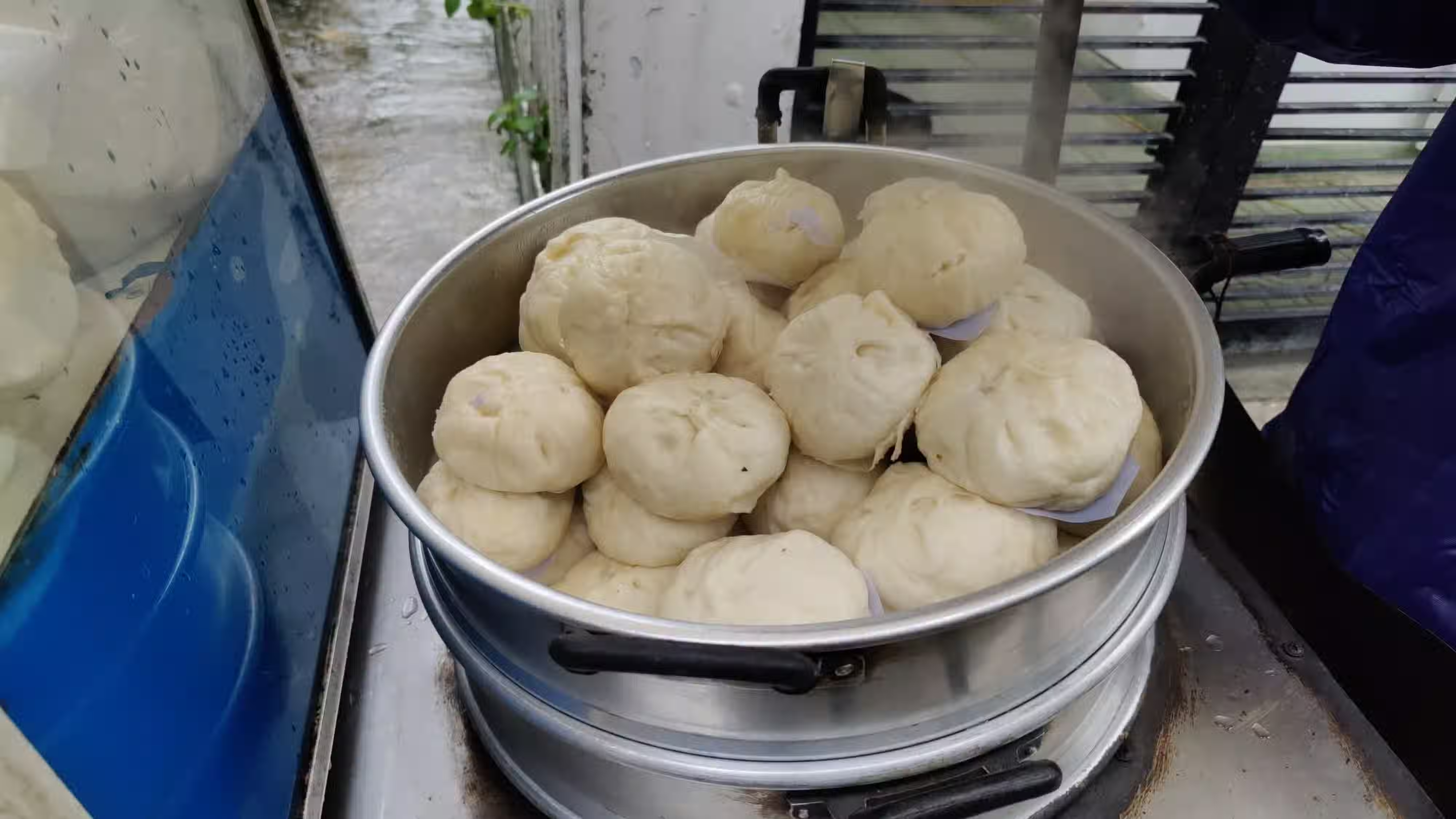
Bahn Bao in Hue. Photo by Ravi Dwivedi, released under CC-BY-SA 4.0.
At the restaurant, we ordered a hot pot. First, they brought noodles and a gas stove. Then came the stock and our gas stove was turned on. The stock was kept simmering on the stove. Then, we had it bit by bit with the noodles. A big hot pot at this place costs 50,000 dongs (₹170). Then we had bánh cuốn. These were steamed rolls made of rice flour for 10,000 dongs (₹33).
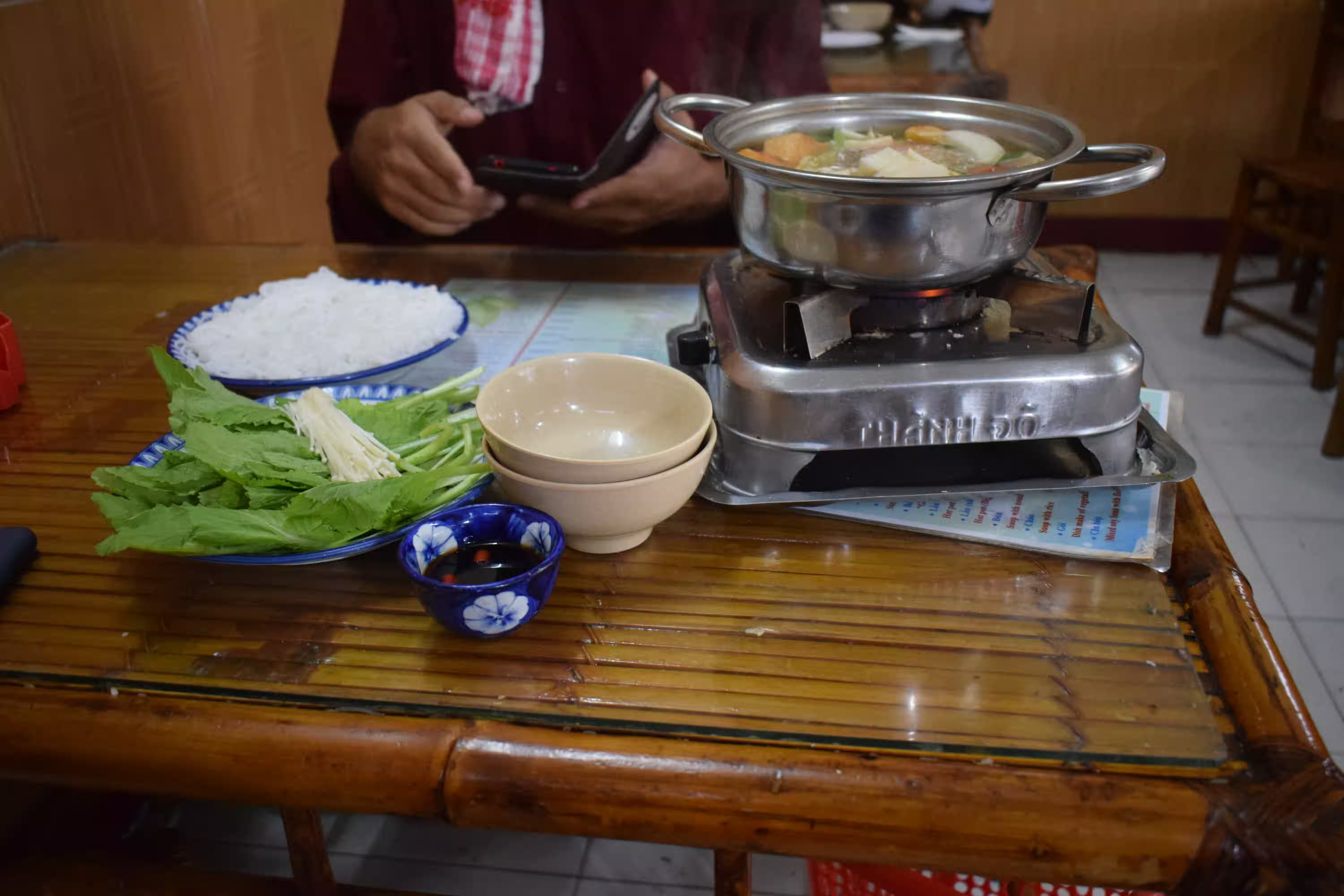
Hot Pot. Photo by Ravi Dwivedi, released under CC-BY-SA 4.0.
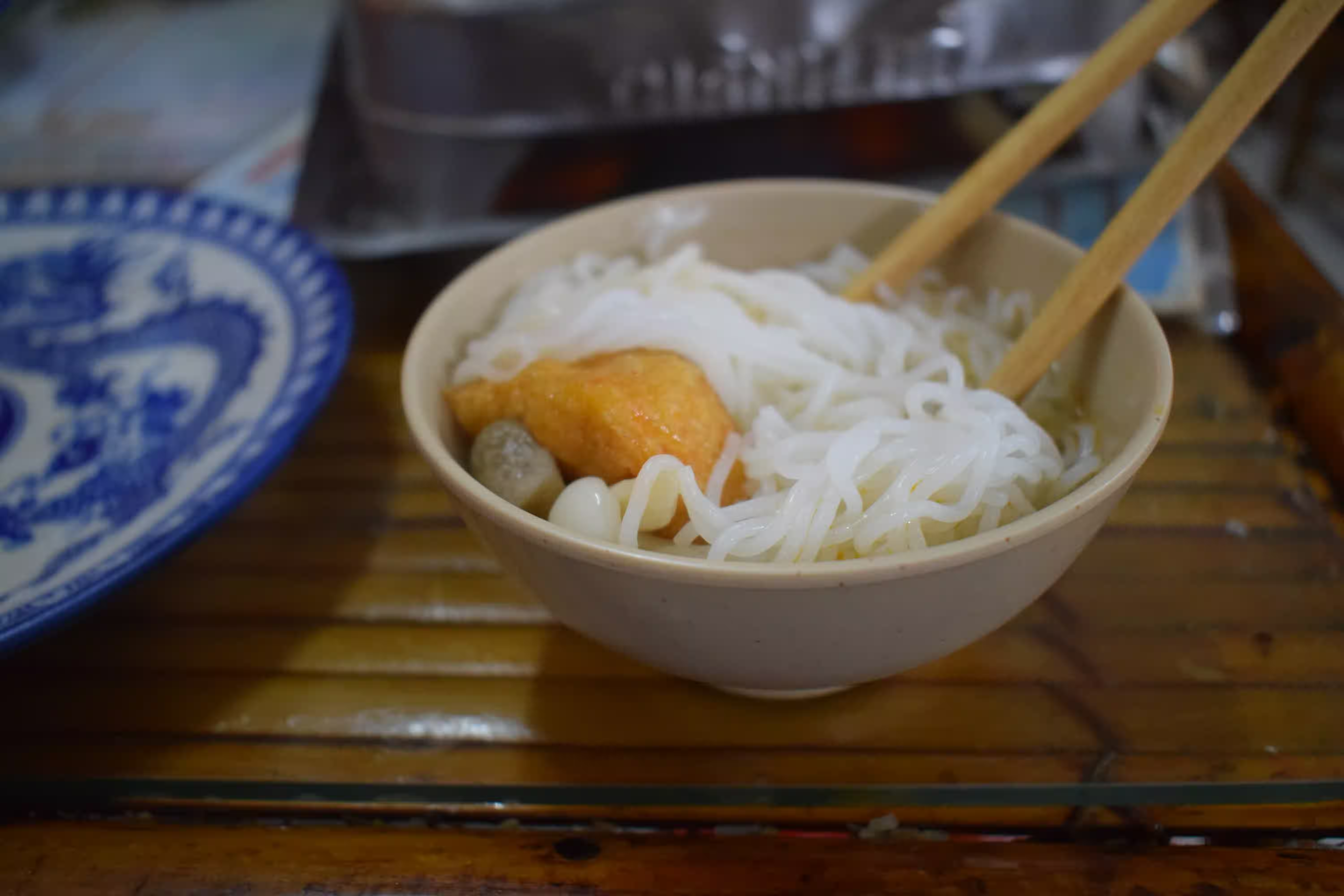
Added soup to the noodles. Photo by Ravi Dwivedi, released under CC-BY-SA 4.0.
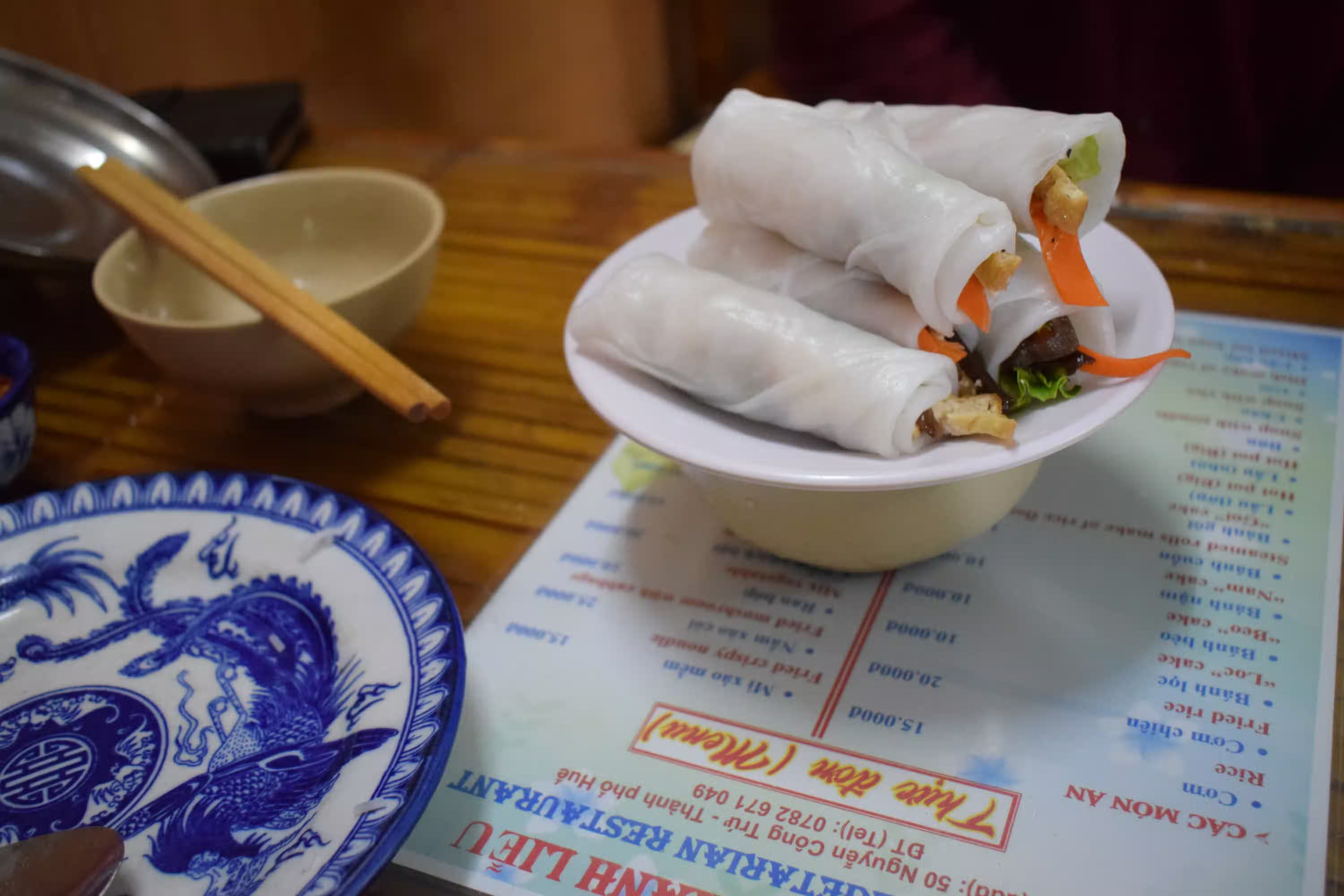
Steamed rolls made of rice flour. Photo by Ravi Dwivedi, released under CC-BY-SA 4.0.
Restaurants in Vietnam usually add photos of the meals in their menu or write a description in English. So, even though the dish names were Vietnamese, we had no problems in ordering food there. In addition, all the places we went to provided free Wi-Fi. They either mention the Wi-Fi password on the bill, on the menu or paste it on the wall. This made our trip smoother without getting a local SIM.
Menu from a restaurant in Ho Chi Minh City with detailed description of the food. Photo by Ravi Dwivedi, released under CC-BY-SA 4.0.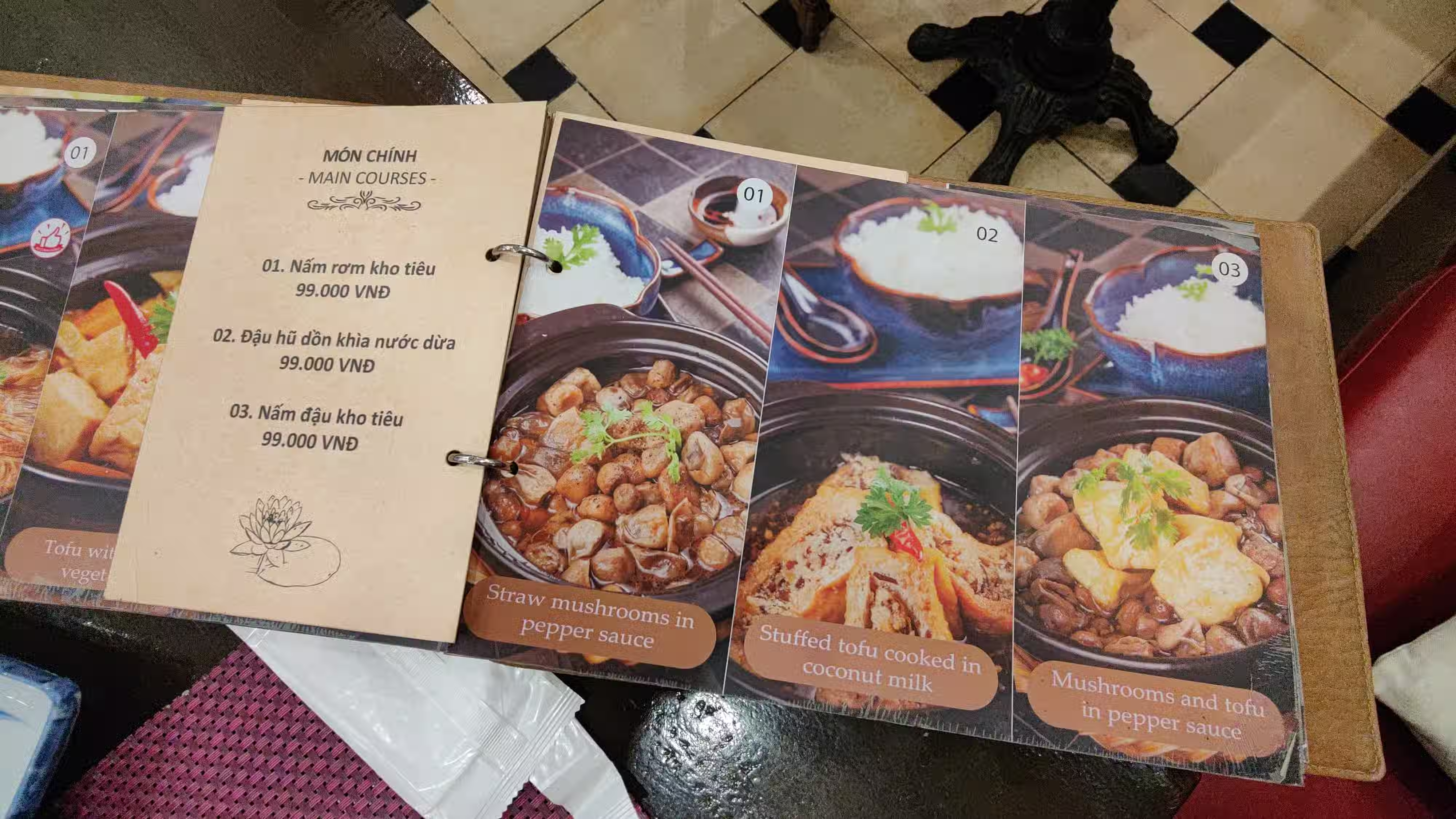
We had booked the train SE20 for Hanoi, which had a departure time of 20:41 from Hue. This one was 948,000 dongs (₹3100) for myself and 870,000 dongs (₹2900) for Badri. My ticket was pricier than Badri’s because I got a lower berth. Our train was late by half an hour, so we waited in the common area of the station. After the train arrived, we got inside and took our seats.
The cabin had four berths—two upper and two lower, similar to India’s First AC class. The ticket inspector came to us and offered us the whole cabin (two additional berths) for 300,000 dongs (₹1,000), which we declined. However, this hinted at the other two seats not being reserved. Eventually, we had the whole cabin to ourselves, as nobody else showed up for the other two berths. It was a 14-hour journey, and I got a good sleep.
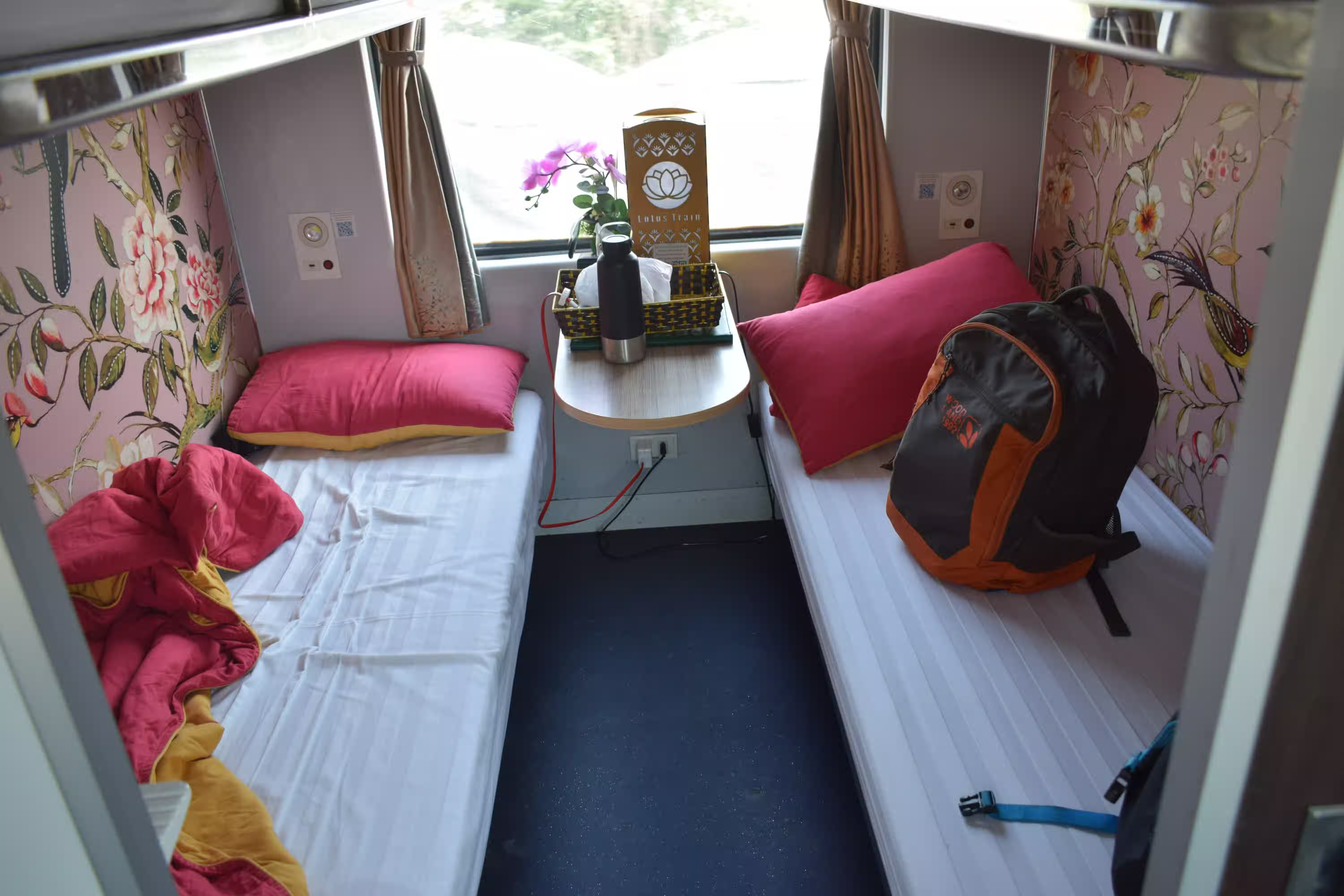
Our berths in the train. Photo by Ravi Dwivedi, released under CC-BY-SA 4.0.
Hanoi
On the morning of the 19th of December 2024, we reached Vietnam’s capital, Hanoi. We had booked a private hotel room for ₹800. It was 1 km from the Hanoi Airport. However, it was pretty far from the railway station. So, we roamed around in the city and went to the hotel in the evening.
First, we walked to a place and had egg coffee with egg sandwiches. Then we went to Hanoi Train Street, which was walking distance from the train station. After clicking some pictures at the train street, we went to a museum nearby. Upon reaching there, we found out that it was closed.
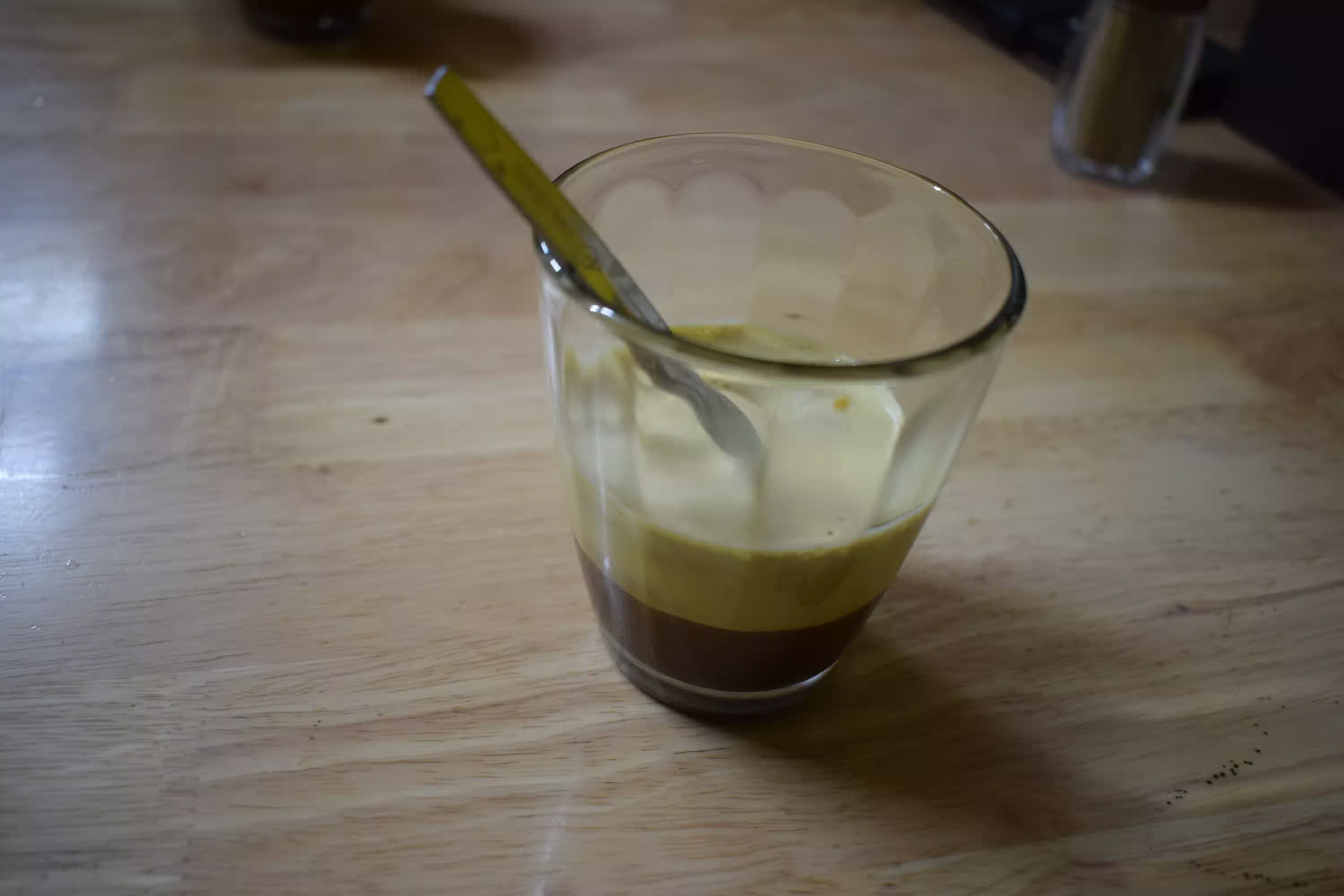
Egg coffee in Hanoi. Photo by Ravi Dwivedi, released under CC-BY-SA 4.0.
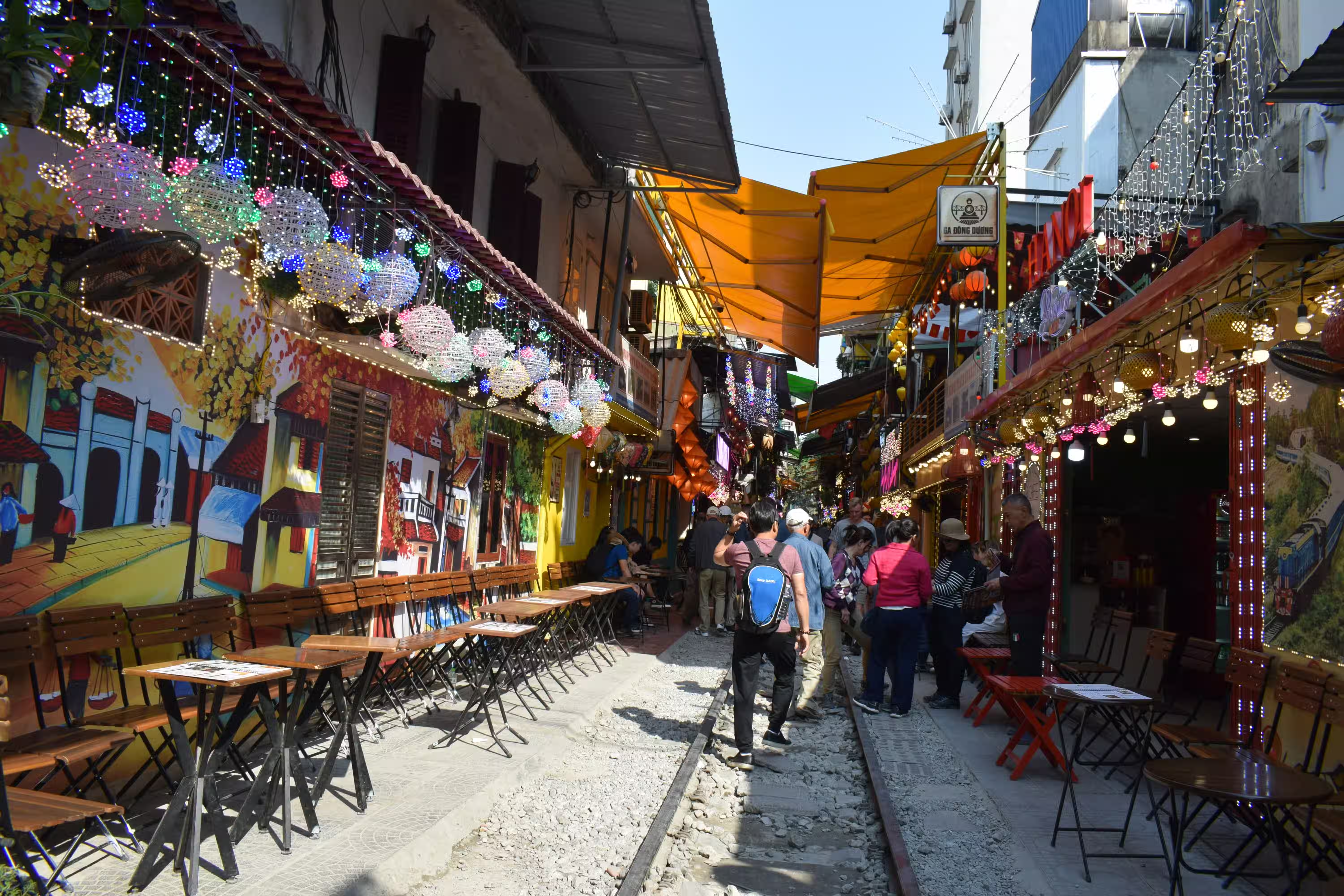
Hanoi train street is a tourist attraction in Hanoi. Photo by Ravi Dwivedi, released under CC-BY-SA 4.0.
Then we went shopping for jackets, as Hanoi was cold compared to other parts of Vietnam we had been to, and since many of them are manufactured in Vietnam, we thought they would be cheaper. I liked some jackets, but they were not my size. Eventually, we didn’t buy anything at the clothes shop.
In the evening, I bought a Vietnamese-styled phin coffee filter and coffee powder from Highlands Coffee. We spent a lot of time in their cafes, so it made sense to buy some souvenirs from there. Badri bought a few coffee filters for his family at Trung Nguyen, where I also bought another filter.
We had dinner at a local place where we had pho and banh it. Bahn it was served packed in banana leaves and it was made of sticky rice.
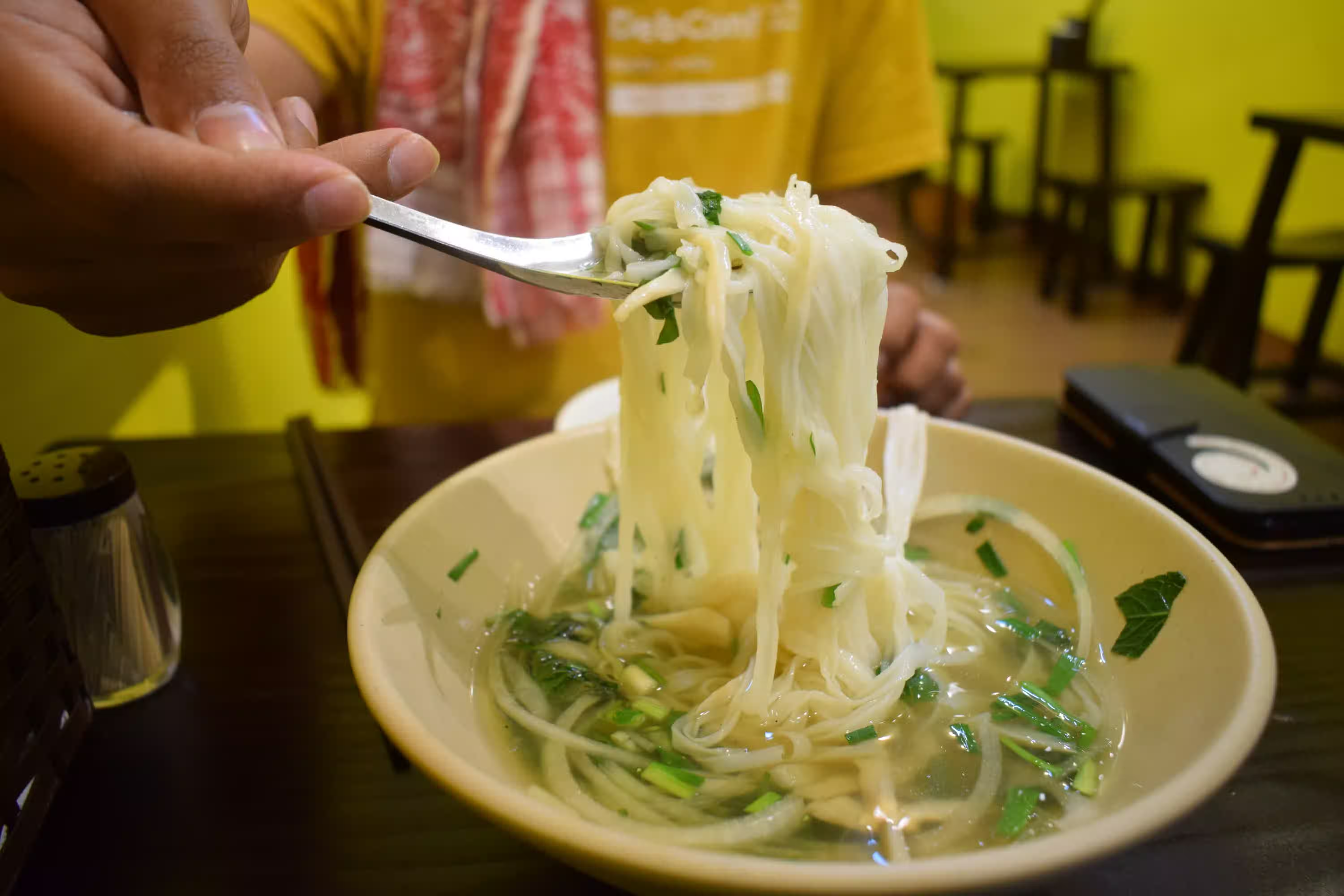
A picture of pho we had in Hanoi. Photo by Ravi Dwivedi, released under CC-BY-SA 4.0.
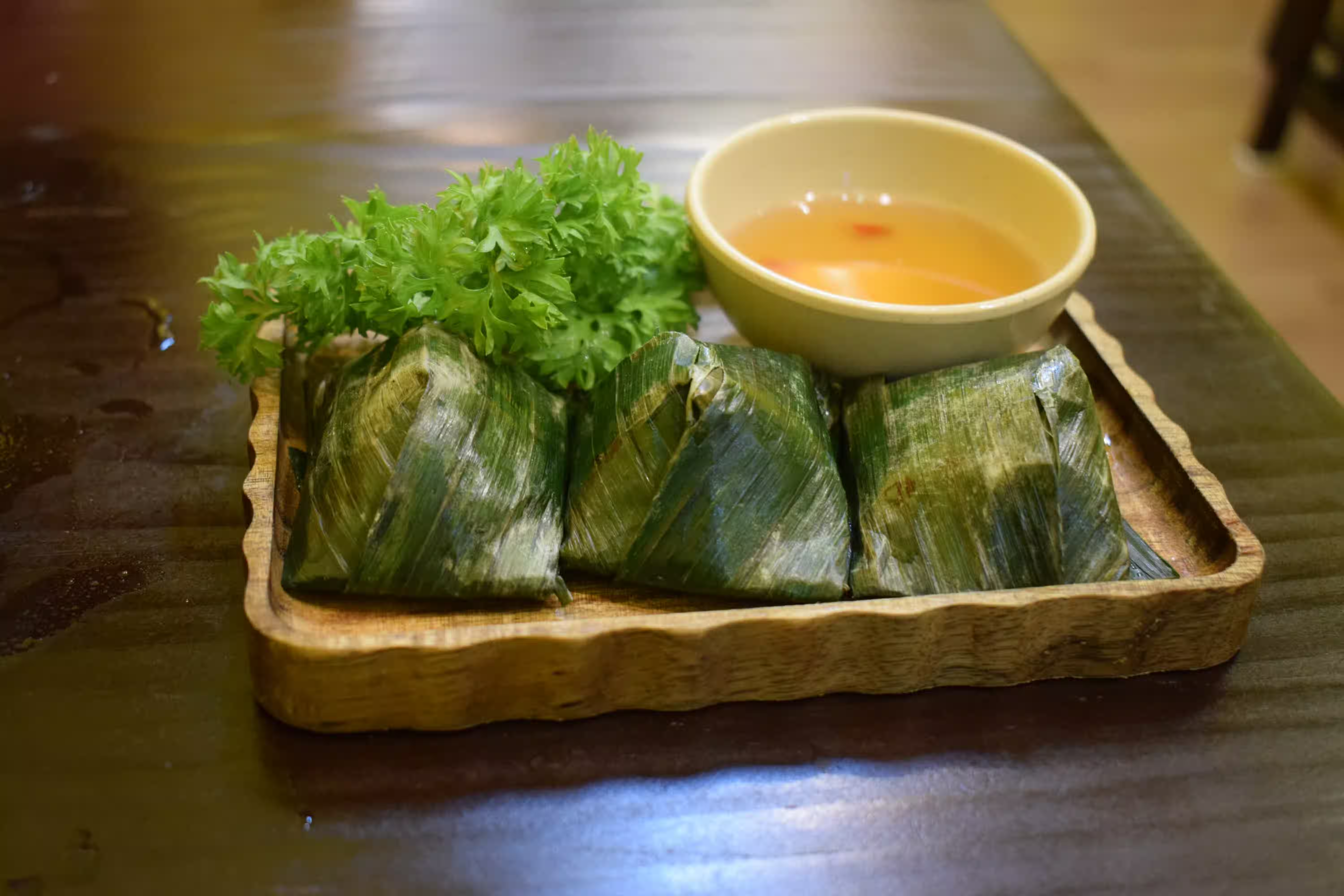
Bahn it is served packed in banana leaves. Photo by Ravi Dwivedi, released under CC-BY-SA 4.0.
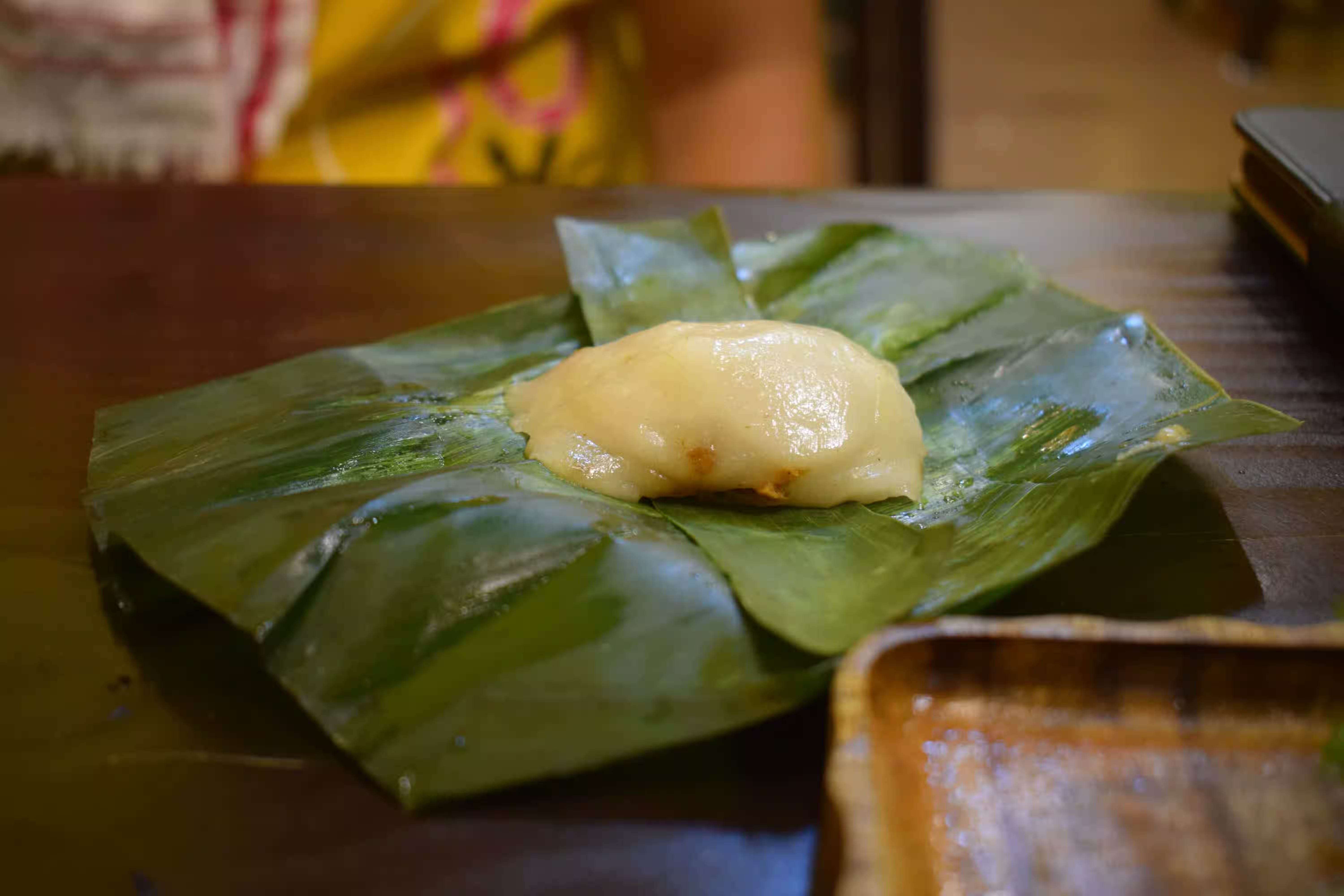
Bahn it. Photo by Ravi Dwivedi, released under CC-BY-SA 4.0.
Next, we went to Hanoi railway station to catch a bus to the airport since our hotel was 1 km from the airport. The locals there helped us take the bus. It took like an hour to get to the airport. We saw on OpenStreetMap that we can take a bus from there to the hotel, but we could not find it. So we walked to our hotel instead.
It was a decent hotel room for ₹800 for a night. We went outside to explore the area and had egg sandwiches and egg coffee at a local place. Again, we were given a complimentary green tea. We went to this place like three times. We had practically become regulars by the time we left.
The next day— 20th of December 2024 — we took a bus to the airport and boarded our flight to Delhi.
Credits: Thanks Badri, Kishy and Richard for proofreading.